Decylamine → 2-(3-{2-[2-(2-{2-Azidoethoxy}ethoxy)ethoxy]ethoxy}-4,5-dimethoxyphenyl)-1,3-dioxolane
Reaction equation

O1C2C=CC(C3C(=O)OC(O)(C4C=CC(OC)=CC=4)C=3[CH2:15][C:16]3[CH:21]=[C:20]([O:22][CH3:23])[C:19]([O:24][CH3:25])=[C:18]([O:26][CH2:27][CH2:28][O:29][CH2:30][CH2:31][O:32][CH2:33][CH2:34][O:35][CH2:36][CH2:37][N:38]=[N+:39]=[N-:40])[CH:17]=3)=CC=2OC1.CCCCCCCCCCN.C1(P(C2C=CC=CC=2)C2C=CC=CC=2)C=CC=CC=1.C[O:82][C:83]1C(OC)=CC(C=O)=C[C:84]=1[OH:93].N(CCOCCOCCOCCOC1C=C(C=C(OC)C=1OC)C=O)=[N+]=[N-]>C1COCC1.C(O)CO.O>[N:38]([CH2:37][CH2:36][O:35][CH2:34][CH2:33][O:32][CH2:31][CH2:30][O:29][CH2:28][CH2:27][O:26][C:18]1[CH:17]=[C:16]([CH:15]2[O:93][CH2:84][CH2:83][O:82]2)[CH:21]=[C:20]([O:22][CH3:23])[C:19]=1[O:24][CH3:25])=[N+:39]=[N-:40]Participants
Reactant 5
 HCID 8916Decylamine
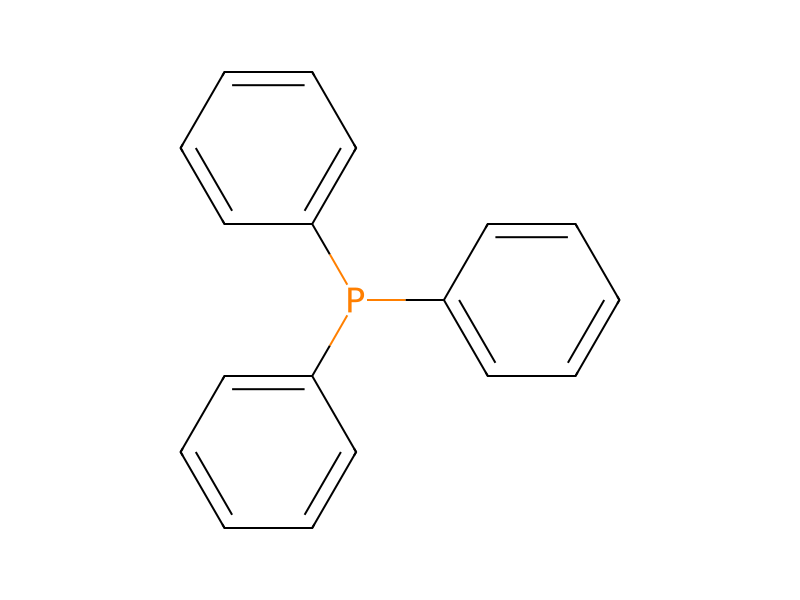 HCID 11776Triphenylphosphine
 HCID 1415133,4-Dimethoxy-5-hydroxybenzaldehyde
 HCID 866321203-Benzo[1,3]dioxol-5-yl-4-(3-(2-{2-[2-(2-azidoethoxy)ethoxy]ethoxy}ethoxy)-4,5-dimethoxybenzyl)-5-hydroxy-5-(4-methoxyphenyl)-5H-furan-2-one
 HCID 866321223-{2-[2-(2-{2-Azidoethoxy}ethoxy)ethoxy]ethoxy}-4,5-dimethoxybenzaldehyde
Product 1

Reagents, catalysts & solvents 3

Procedure
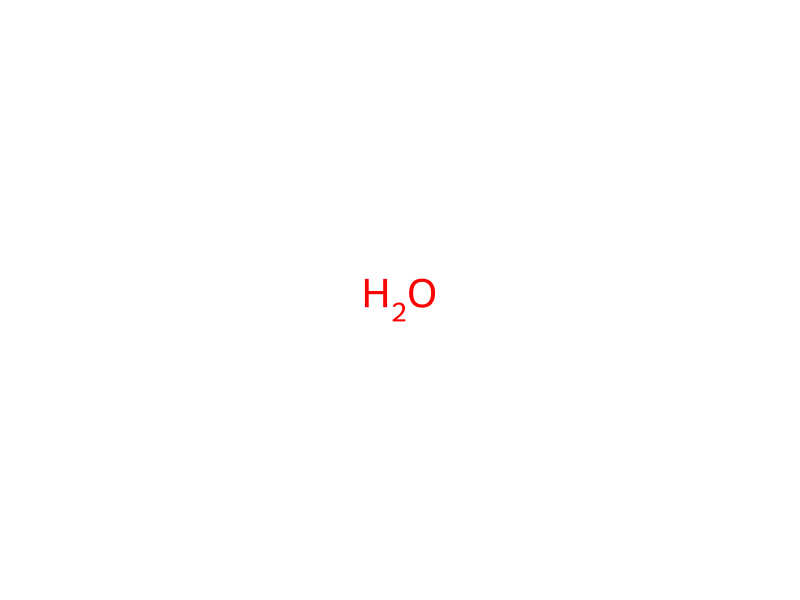
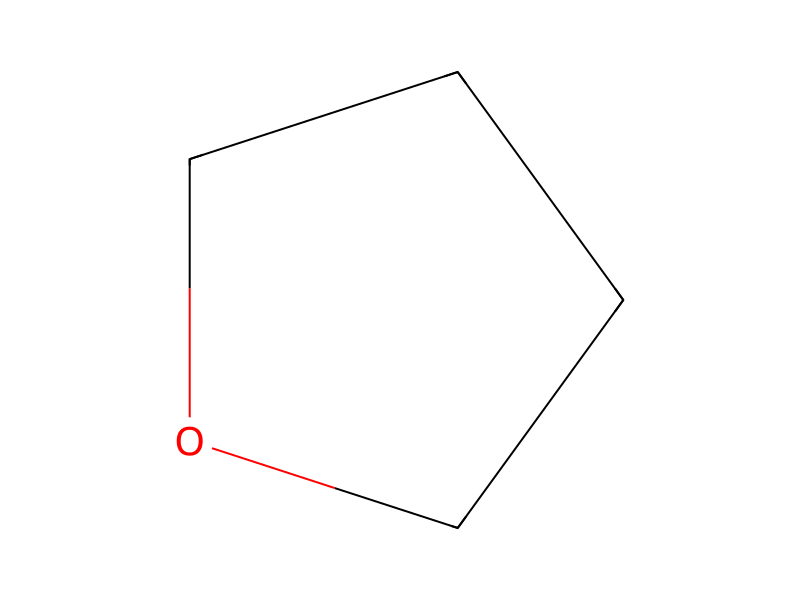
Compound 9 is then converted to the free amine 10 by Staudinger-Reaction with triphenylphosphine and water in THF (scheme 3). Regrettably, the yields in this step were disappointing (<20%) and several byproducts made the purification rather difficult. This probably occurred due to reaction of the phosphine with one of the oxygen-containing moieties of the butenolide ring structure. To circumvent these difficulties a second reaction sequence was chosen, where the amine was generated earlier and then protected for further conversion. This second sequence (scheme 4) also starts with the reaction of 3,4-dimethoxy-5-hydroxybenzaldehyde 1 with PEG-derivative 7. The aldehyde function of azide 8 is then protected with ethylene glycol, giving dioxolane 11 in nearly quantitative yield after purification. This kind of protection allows subsequent reduction of the azide and BOC protection of the generated amine 12 without the risk of intermolecular imine formation. The dioxolane protecting group of 13 then can easily be destroyed by reaction with catalytic amounts of iodine in acetone without affecting the BOC protecting group. The product benzaldehyde 14 and ketoester 3 are then converted to the desired butenolide derivative by the same procedure as described above for the azide functionalised aldehyde 8 (scheme 3). The product of this rection is the PEG-modified, N-Boc-protected butenolide 15, which in the finishing step is deprotected by treatment with trifluoroacetic acid (TFA) in methylene chloride. The final product 16 can be isolated as the TFA salt which can be handled and stored easily at 4° C.
Workup
- customRegrettably, the yields in this step
- customthe purification rather difficult
- customThis probably occurred due to reaction of the phosphine with one of the oxygen-
- additioncontaining moieties of the butenolide ring structure
Sources & evidence
- ORD record
- ord-e5f7214afcf244f7b38266223393fa70
- Source dataset
- uspto-grants-2012_07
- Patent number
- US08212058B2
Reaction notes
Loading…