Oxalic Acid → HCID 178526029, compound
Reaction equation

[O-2].[O-2].[O-2].[O-2].[O-2].[V+5:6].[V+5].[C:8]([OH:13])(=[O:12])[C:9]([OH:11])=[O:10]>O>[C:8]([O-:13])(=[O:12])[C:9]([O-:11])=[O:10].[V+5:6].[C:8]([O-:13])(=[O:12])[C:9]([O-:11])=[O:10].[C:8]([O-:13])(=[O:12])[C:9]([O-:11])=[O:10].[C:8]([O-:13])(=[O:12])[C:9]([O-:11])=[O:10].[C:8]([O-:13])(=[O:12])[C:9]([O-:11])=[O:10].[V+5:6]Participants
Reactant 2
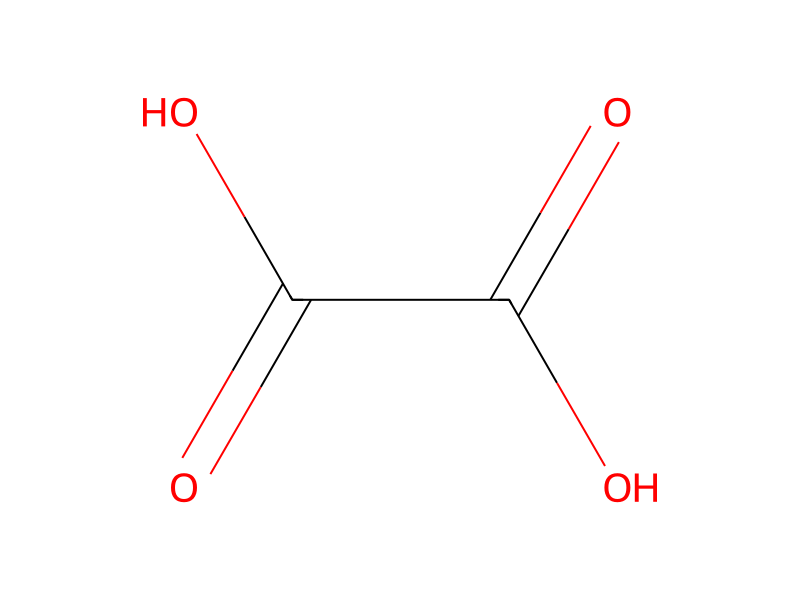

Product 1

Reagents, catalysts & solvents 1

Procedure
To 229 g of vanadium pentoxide (manufactured by Wako Pure Chemical Industries, Ltd., special grade), 500 mL of water (distilled water) was added and then 477 g of oxalic acid (manufactured by Wako Pure Chemical Industries, Ltd., special grade) was dissolved in the resulting solution at 80 to 90° C. under heating and stirring, to obtain a vanadium oxalate solution. Separately, to 963 g of oxalic acid, 400 mL of water was added and heated to 50 to 60° C., and then, an aqueous solution of 252 g of chromic anhydride (manufactured by Wako Pure Chemical Industries, Ltd., special grade) in 200 mL of water was dissolved under vigorous stirring, to obtain a chromium oxalate solution. The vanadium oxalate solution was mixed with the chromium oxalate solution at 50 to 60° C. to obtain a vanadium-chromium solution. To the vanadium-chromium solution, an aqueous solution of 41.1 g of phosphorus molybdate (H3(PMo12O40).20H2O (manufactured by Nippon Inorganic Colour & Chemical Co., Ltd.) in 100 mL of water and further an aqueous solution of 4.0 g of potassium acetate (manufactured by Wako Pure Chemical Industries, Ltd., special grade) in 100 mL of water were added. Thereafter, 2500 g of a 20% by weight aqueous silica sol (Na2O content: 0.02% by weight) was added. To the resulting slurry, 78 g of boric acid was added and well mixed and then the slurry was condensed by heating to about 3800 g. The resulting catalyst solution was spray-dried in a drier while maintaining the inlet at 250° C. and the outlet at 130° C. After further drying at 130° C. in a dryer for 12 h, the dried catalyst was burnt at 400° C. for 0.5 h and then burnt at 550° C. for 8 h in air flow. The atomic ratio of the obtained catalyst was V:Cr:B:Mo:P:Na:K=1:1:0.5:0.086:0.007:0.009:0.020 and the catalyst concentration was 50% by weight.
Workup
- temperatureunder heating
Sources & evidence
- ORD record
- ord-fdc0ce41fe1c404d8fb7ba5d7238f420
- Source dataset
- uspto-grants-2012_07
- Patent number
- US08212080B2
Reaction notes
Loading…