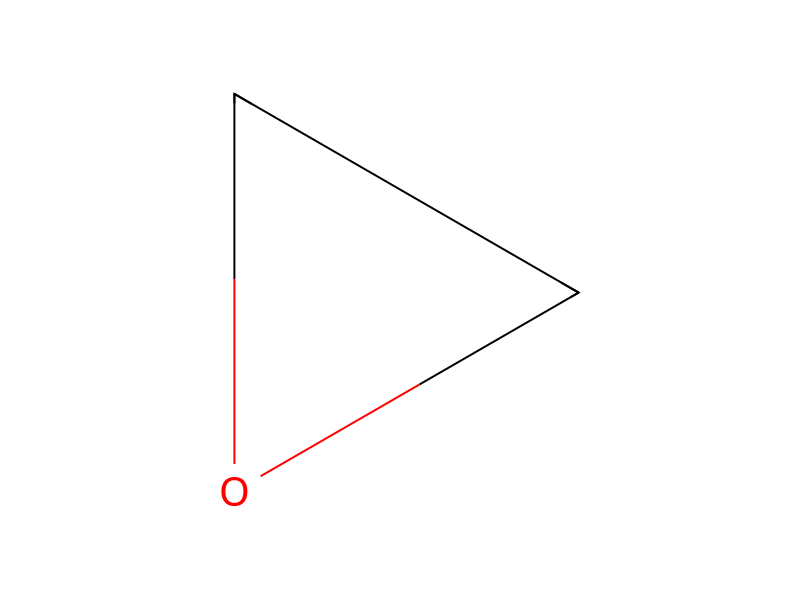
4-Benzyloxyaniline → Ethylene Oxide
Reaction equation

[CH2:1]([O:8][C:9]1[CH:15]=[CH:14][C:12]([NH2:13])=[CH:11][CH:10]=1)[C:2]1[CH:7]=[CH:6][CH:5]=[CH:4][CH:3]=1>[Fe].CC(O)=O.[Pd]>[CH2:1]([O:8][C:9]1[CH:10]=[CH:11][C:12]([NH2:13])=[CH:14][CH:15]=1)[C:2]1[CH:3]=[CH:4][CH:5]=[CH:6][CH:7]=1.[CH2:9]1[O:8][CH2:15]1Participants

Reagents, catalysts & solvents 2


Procedure
Phenol N-mustard is synthesized by to known procedures with modification. Scheme 8 shows the synthetic route for phenol mustard. Treatment of 4-nitrophenol (40) with benzyl chloride or 4-fluoro-1-nitrobenzene (42) with benzyl alcohol in the presence of base (such as NaOH, KOH, Na2CO3, K2CO3 or organic base) gives compound 41, which is converted into 4-benzyloxyaniline (43) by reduction (Fe/CH3COOH or Pd/C, H2). Treatment of 43 with ethylene oxide affords 4-N,N-bis(2-hydroxyethyl)aminophenyl benzyl ether 40.37 Alternatively, the intermediate 44 can be prepared by reacting 4-hydroxyaniline (45) with 2-chloroethanol in the presence of Na2CO3 followed with benzyl bromide.38 Treatment of 44 with thionyl chloride (or POCl3, methanesulfonyl chloride/pyridine, and other halogenating reagents) yields 4-N,N-bis(2-chloroethyl)aminophenyl benzyl ether 47. The O-benzyl protecting function of 47 is removed by catalytic hydrogenation or by treating with HCl/CH3COOH to give the desired phenol mustard 48, which is then treated with phosgene affords 4-[bis(2-chloroethyl)amino]phenylchloridocarbamate (49). One can also convert 48 to 4-[N,N-bis(2-chloroethyl)aminophenyl-4-nitrophenyl carbonate (50) by reacting with p-nitrochiroformate/Et3N to yield 4-[N,N-bis(2-chloroethyl)aminophenyl-4-nitro-phenyl carbonate (50).39-41 Both 49 and 50 can be used for the synthesis of the target compounds having a carbamic acid ester linkage.
Sources & evidence
- ORD record
- ord-d58c998638fb457cbf6db7fa5ec2ff31
- Source dataset
- uspto-grants-2012_07
- Patent number
- US08222297B2
Reaction notes
Loading…