1-Indanone → HCID 67985115, compound
Reaction equation

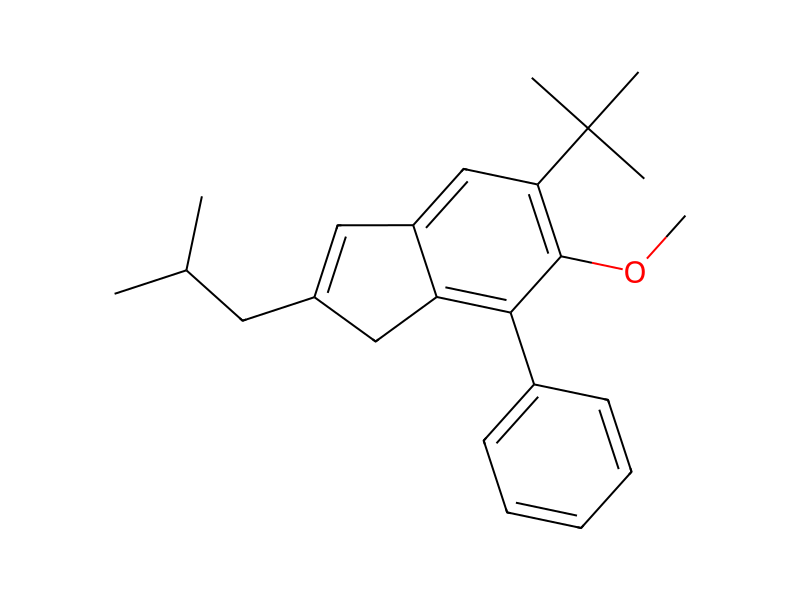
[C:1]([C:5]1[CH:13]=[C:12]2[C:8]([CH2:9][CH:10]([CH2:15][CH:16]([CH3:18])[CH3:17])[C:11]2=O)=[CH:7][C:6]=1[O:19][CH3:20])([CH3:4])([CH3:3])[CH3:2].C([C:25]1[CH:30]=[CH:29][CH:28]=[CH:27][C:26]=1OC)(C)(C)C.C(C(=C)C(O)=O)C(C)C.C1(=O)C2C(=CC=CC=2)CC1>>[C:1]([C:5]1[CH:13]=[C:12]2[C:8](=[C:7]([C:25]3[CH:30]=[CH:29][CH:28]=[CH:27][CH:26]=3)[C:6]=1[O:19][CH3:20])[CH2:9][C:10]([CH2:15][CH:16]([CH3:18])[CH3:17])=[CH:11]2)([CH3:3])([CH3:2])[CH3:4]Participants
5


Procedure
The bis-indenyl ligand of formula (VIII) can be prepared following a synthetic strategy as outlined in Scheme 1. The key intermediate, the 6-tert-butyl-2-isobutyl-5-methoxyindan-1-one, was prepared by acylation of 2-tert-butylanisol with 2-isobutylacrylic acid followed by Nazarov cyclisation. Subsequent bromination, cross-coupling reaction with sodium tetraphenyl borate and reduction/dehydration of the obtained indanone gave the 5-tert-butyl-2-isobutyl-6-methoxy-7-phenyl-1H-indene. Reaction of its lithium salt with dichlorodimethylsilane produced the actual ligand bis(6-tert-butyl-2-isobutyl-5-methoxy-4-phenyl-1H-inden-1-yl)(dimethyl)silane in almost quantitative yield.
Sources & evidence
- ORD record
- ord-9a12a2662e3845ff97368b4e3fef52c2
- Source dataset
- uspto-grants-2015_07
- Patent number
- US09079985B2
Reaction notes
Loading…