Potassium Carbonate → (+)-2-(4-Ethyl-3-oxo-1-oxa-4,9-diazaspiro[5.5]undecan-9-yl)-2-(2-fluoro-4-(3-fluoroquinolin-7-yl)phenyl)acetamide
Reaction equation

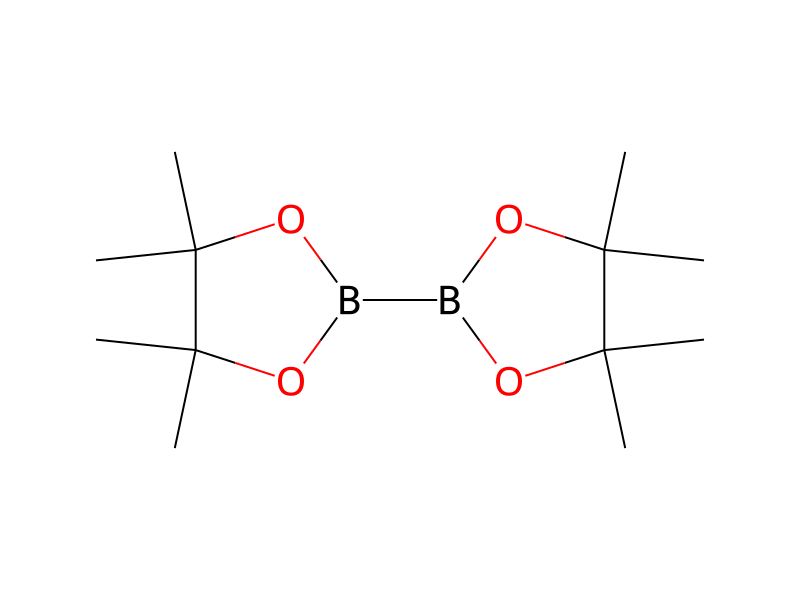
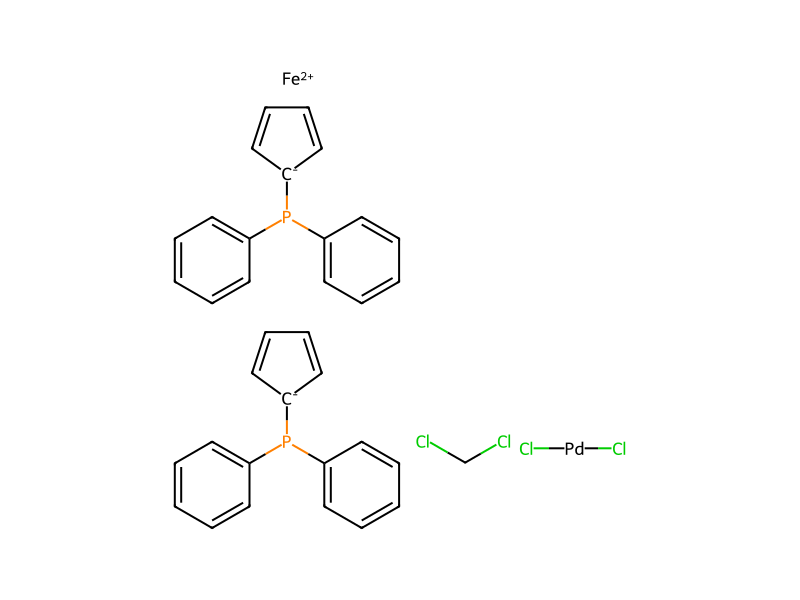
Br[C:2]1[CH:7]=[CH:6][C:5]([CH:8]([N:12]2[CH2:25][CH2:24][C:15]3([O:20][CH2:19][C:18](=[O:21])[N:17]([CH2:22][CH3:23])[CH2:16]3)[CH2:14][CH2:13]2)[C:9]([NH2:11])=[O:10])=[C:4]([F:26])[CH:3]=1.B1(B2OC(C)(C)C(C)(C)O2)OC(C)(C)C(C)(C)O1.C([O-])(=O)C.[K+].Br[C:51]1[CH:60]=[C:59]2[C:54]([CH:55]=[C:56]([F:61])[CH:57]=[N:58]2)=[CH:53][CH:52]=1.C([O-])([O-])=O.[K+].[K+]>O1CCOCC1.C1C=CC(P(C2C=CC=CC=2)[C-]2C=CC=C2)=CC=1.C1C=CC(P(C2C=CC=CC=2)[C-]2C=CC=C2)=CC=1.Cl[Pd]Cl.[Fe+2].C(Cl)Cl>[CH2:22]([N:17]1[CH2:16][C:15]2([CH2:24][CH2:25][N:12]([CH:8]([C:5]3[CH:6]=[CH:7][C:2]([C:51]4[CH:60]=[C:59]5[C:54]([CH:55]=[C:56]([F:61])[CH:57]=[N:58]5)=[CH:53][CH:52]=4)=[CH:3][C:4]=3[F:26])[C:9]([NH2:11])=[O:10])[CH2:13][CH2:14]2)[O:20][CH2:19][C:18]1=[O:21])[CH3:23]Participants
Reactant 5




Product 1

Reagents, catalysts & solvents 2

Conditions
- Temperature
- 110 °C
Procedure
A solution of 2-(4-bromo-2-fluorophenyl)-2-(4-ethyl-3-oxo-1-oxa-4,9-diazaspiro[5.5]undecan-9-yl)acetamide (266 mg, 0.47 mmol) in dry 1,4-dioxane (3 mL) was treated with bis(pinacolato)diboron (142 mg, 0.56 mmol), potassium acetate (49 mg, 0.5 mmol) and PdCl2(dppf)-CH2Cl2 adduct (19 mg, 0.023 mmol). The reaction mixture was degassed with nitrogen for ˜3 min and the vessel was purged with nitrogen, sealed, and heated to 110° C. for 3 h. Analysis of a reaction mixture aliquot indicated complete conversion of the starting material to the boronate intermediate. To the cooled reaction mixture was added 7-bromo-3-fluoroquinoline (105 mg, 0.47 mmol), PdCl2(dppf)-CH2Cl2 adduct (19 mg, 0.023 mmol) and 2M aq K2CO3 (0.7 mL, 1.4 mmol). The reaction mixture was purged with nitrogen, sealed, and heated at 120° C. for 1 h. The reaction mixture was diluted with water (50 mL) and extracted with dichloromethane (3×100 mL). The combined organic layers were dried over anhydrous sodium sulfate, filtered and concentrated under reduced pressure. Purification of the residue by reverse phase HPLC (5-75% acetonitrile:water with 0.1% NH4OH) afforded the racemic title product, which was resolved by chiral HPLC (Lux Cell 4, methanol) to afford the title product in 95% ee (29 mg, 12% yield). αD=+26 deg (c=0.14, methanol); MS(ES)+ m/e 495 [M+H]+; 1H NMR (400 MHz, CD2Cl2) δ ppm 1.06-1.18 (m, 3 H) 1.63-1.84 (m, 2 H) 1.90-1.97 (m, 2 H) 2.27-2.39 (m, 1 H) 2.53-2.73 (m, 2 H) 2.80 (d, J=11.37 Hz, 1 H) 3.18 (s, 2 H) 3.41 (q, J=7.07 Hz, 2 H) 3.95-4.08 (m, 2 H) 4.53 (s, 1 H) 6.28 (br. s., 1 H) 7.29 (br. s., 1 H) 7.47 (t, J=7.71 Hz, 1 H) 7.55 (dd, J=11.24, 1.89 Hz, 1 H) 7.62 (dd, J=7.96, 1.89 Hz, 1 H) 7.83-7.93 (m, 2 H) 7.93-8.00 (m, 1 H) 8.37 (d, J=1.77 Hz, 1 H) 8.88 (d, J=2.53 Hz, 1 H).
Workup
- customThe reaction mixture was degassed with nitrogen for ˜3 min
- customthe vessel was purged with nitrogen
- customsealed
- customTo the cooled reaction mixture
- customThe reaction mixture was purged with nitrogen
- customsealed
- temperatureheated at 120° C. for 1 h
- additionThe reaction mixture was diluted with water (50 mL)
- extractionextracted with dichloromethane (3×100 mL)
- dry with materialThe combined organic layers were dried over anhydrous sodium sulfate
- filtrationfiltered
- concentrationconcentrated under reduced pressure
- customPurification of the residue by reverse phase HPLC (5-75% acetonitrile:water with 0.1% NH4OH)
Sources & evidence
- ORD record
- ord-d0f3053f72ae4d62a5321c9167eea091
- Source dataset
- uspto-grants-2015_07
- Patent number
- US09084794B2
Reaction notes
Loading…