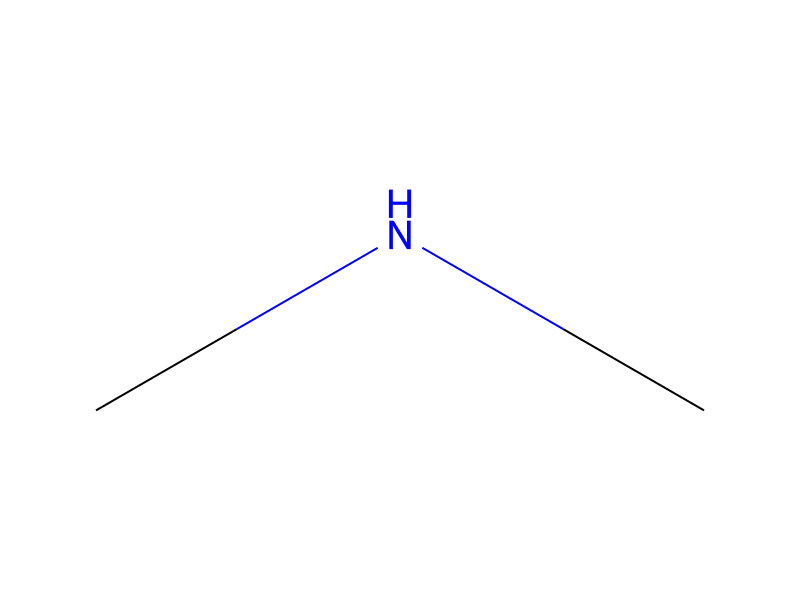
Dimethylamine → [3-(Dimethylamino)propyl](triphenyl)phosphanium bromide--hydrogen bromide (1/1/1)
Reaction equation

[Br-:1].[Br:2][CH2:3][CH2:4][CH2:5][P+:6]([C:19]1[CH:24]=[CH:23][CH:22]=[CH:21][CH:20]=1)([C:13]1[CH:18]=[CH:17][CH:16]=[CH:15][CH:14]=1)[C:7]1[CH:12]=[CH:11][CH:10]=[CH:9][CH:8]=1.[CH3:25][NH:26][CH3:27]>C(O)C.O>[BrH:2].[Br-:1].[CH3:25][N:26]([CH3:27])[CH2:3][CH2:4][CH2:5][P+:6]([C:19]1[CH:24]=[CH:23][CH:22]=[CH:21][CH:20]=1)([C:13]1[CH:18]=[CH:17][CH:16]=[CH:15][CH:14]=1)[C:7]1[CH:12]=[CH:11][CH:10]=[CH:9][CH:8]=1Participants
5




Conditions
- Temperature
- 100 °C
Procedure
To a suspension of 3-bromopropyltriphenylphosphonium bromide (1.0 g, 2.1 mmol) in ethanol (5 mL) was added a solution of 40% dimethylamine in water (3 mL) at room temperature. The mixture was stirred and heated at 100° C. for 30 min in a sealed microwave tube. After the reaction mixture was concentrated under reduced pressure, the solid residue was recrystallized in acetonitrile to afford (3-(dimethylamino)propyl)triphenylphosphonium bromide hydrobromide salt (0.90 g, 82%) as a white solid, and was used in the following step. ESI MS m/z 348.3 (Ph3PCH2CH2CH2NMe2)+.
Workup
- concentrationAfter the reaction mixture was concentrated under reduced pressure
- customthe solid residue was recrystallized in acetonitrile
Sources & evidence
- ORD record
- ord-26d3e2d863194984a58bd0fb54e1234a
- Source dataset
- uspto-grants-2015_07
- Patent number
- US09090535B2
Reaction notes
Loading…