Indoline → N-[1-Acetyl-3-(2-ethoxycarbonylethyl)-4,6-dimethylindolin-7-yl]-2,2-dimethylpropanamide
Reaction equation

C([O:3][CH3:4])#N.N1[C:13]2[C:8](=[CH:9]C=CC=2)[CH2:7]C1.[C:14]([N:17]1[C:25]2[C:20](=[C:21]([CH3:31])[C:22](Br)=[C:23]([CH3:29])[C:24]=2[N+:26]([O-])=O)[CH:19]([CH2:32][CH2:33][C:34]([O:36][CH2:37][CH3:38])=[O:35])[CH2:18]1)(=[O:16])[CH3:15]>C1C=CC=CC=1.[Pd]>[C:14]([N:17]1[C:25]2[C:20](=[C:21]([CH3:31])[CH:22]=[C:23]([CH3:29])[C:24]=2[NH:26][C:4](=[O:3])[C:8]([CH3:13])([CH3:9])[CH3:7])[CH:19]([CH2:32][CH2:33][C:34]([O:36][CH2:37][CH3:38])=[O:35])[CH2:18]1)(=[O:16])[CH3:15]Participants
Reactant 3
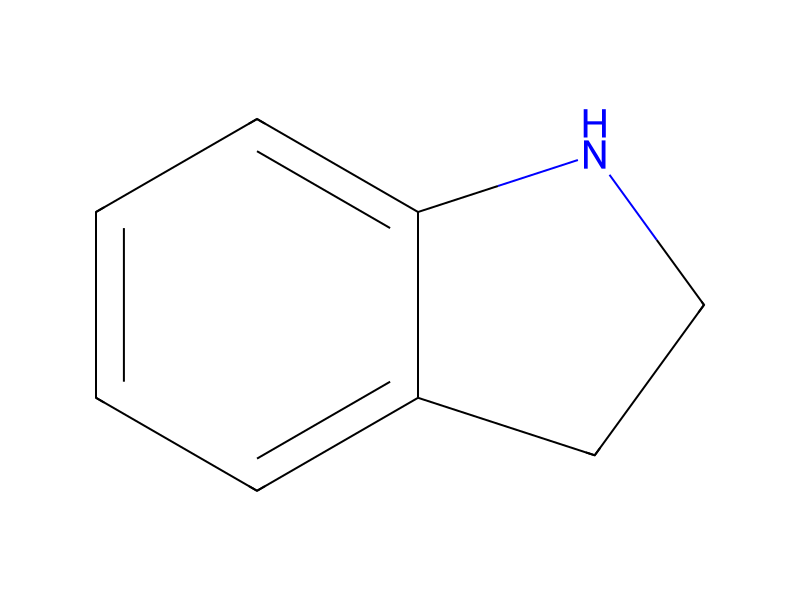


Product 1

Reagents, catalysts & solvents 2


Procedure
1.26 (3H, t, J=7.1 Hz, CH2 CH3), 1.60˜2.20 (2H, m, —CH2 CH2 CO2—), 2.00·2.20 (2H, m, —CH2 CH2 CO2—), 2.23 (3H, s, >NCOCH3), 2.44, 2.47 (6H, s×2, —CH3x2), 3.10·3.60 (1H, m, Indoline C3—H), 4.00 (2H, m, Indoline C2—H), 4.10 (2H, q, J=7.1 Hz, —CH2 CH3). (8) 1-Acetyl-5-bromo-3-(2-ethoxycarbonylethyl)-4,6-dimethyl-7-nitro-indoline (2.7 g) was dissolved in benzene (100 ml), and 5% Pd—C. (500 mg) was added, which was followed by catalytic hydrogenation at room temperature under atmospheric pressure. Pd—C. was filtered off and benzene was evaporated under reduced pressure. CHCl3 (100 ml) was added to the residue, and the mixture was washed successively with saturated aqueous solution of sodium hydrogencarbonate and saturated brine and dried over anhydrous sodium sulfate. CHCl3 was evaporated under reduced pressure. The residue was dissolved in CHCl3 (20 ml) and pivaloyl chloride (790 mg) and Et3N (80 mg) were added, which was followed by stirring at room temperature for 30 min. CHCl3 (100 ml) was added, and the mixture was washed successively with 5% aqueous citric acid and saturated brine and dried over anhydrous sodium sulfate. CHCl3 was evaporated under reduced pressure. The residue was purified by silica gel column chromatography (eluent: CHCl3/MeOH=50/1−10/1) to give 2.6 g of N-[1-acetyl-3-(2-ethoxycarbonylethyl)-4,6-dimethylindolin-7-yl]-2,2-dimethylpropanamide.
Workup
- addition(500 mg) was added
- customwas followed by catalytic hydrogenation at room temperature under atmospheric pressure
- filtrationwas filtered off
- custombenzene was evaporated under reduced pressure
- additionCHCl3 (100 ml) was added to the residue
- washthe mixture was washed successively with saturated aqueous solution of sodium hydrogencarbonate and saturated brine
- dry with materialdried over anhydrous sodium sulfate
- customCHCl3 was evaporated under reduced pressure
- dissolutionThe residue was dissolved in CHCl3 (20 ml)
- additionpivaloyl chloride (790 mg) and Et3N (80 mg) were added
- additionCHCl3 (100 ml) was added
- washthe mixture was washed successively with 5% aqueous citric acid and saturated brine
- dry with materialdried over anhydrous sodium sulfate
- customCHCl3 was evaporated under reduced pressure
- customThe residue was purified by silica gel column chromatography (eluent: CHCl3/MeOH=50/1−10/1)
Sources & evidence
- ORD record
- ord-749afb5f48fc4fea81c6958387b3cf4b
- Source dataset
- uspto-grants-2001_03
- Patent number
- US06200988B1
Reaction notes
Loading…