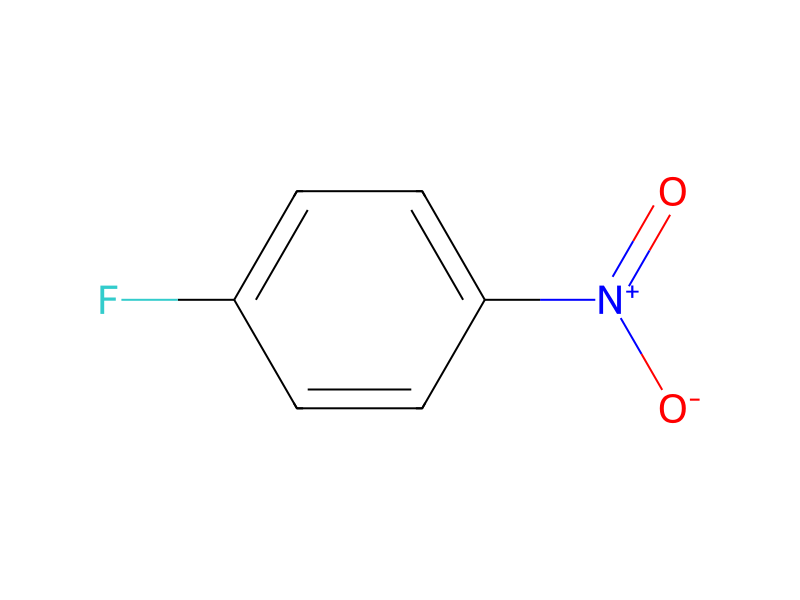
p-Fluoronitrobenzene → 5-(4-Nitrophenoxy)-3-chloropyridine
Reaction equation

F[C:2]1[CH:7]=[CH:6][C:5]([N+:8]([O-:10])=[O:9])=[CH:4][CH:3]=1.[Cl:11][C:12]1[CH:13]=[N:14][CH:15]=[C:16]([OH:18])[CH:17]=1>>[Cl:11][C:12]1[CH:13]=[N:14][CH:15]=[C:16]([O:18][C:2]2[CH:7]=[CH:6][C:5]([N+:8]([O-:10])=[O:9])=[CH:4][CH:3]=2)[CH:17]=1Participants
3


Procedure
4-Fluoro-nitrobenzene (5.0 g) and 3-chloro-5-hydroxypyridine (4.59 g) were combined at 60° C. using a method similar to that of Example 21.2 to provide 7.78 g of 4-(3-chloro-5-pyridyloxy)nitrobenzene. mp 80-82° C.
Workup
- customwere combined at 60° C.
Sources & evidence
- ORD record
- ord-51e1c8b247084dbc8b96b46a2a4809bd
- Source dataset
- uspto-grants-2001_03
- Patent number
- US06200995B1
Reaction notes
Loading…