Phosphorus tribromide → 6-Cyano-1-ethyl-2-bromomethyl indole
Reaction equation

P(Br)(Br)[Br:2].[CH2:5]([N:7]1[C:15]2[C:10](=[CH:11][CH:12]=[C:13]([C:16]#[N:17])[CH:14]=2)[CH:9]=[C:8]1[CH2:18]O)[CH3:6]>ClCCl>[C:16]([C:13]1[CH:14]=[C:15]2[C:10]([CH:9]=[C:8]([CH2:18][Br:2])[N:7]2[CH2:5][CH3:6])=[CH:11][CH:12]=1)#[N:17]Participants
Reactant 2
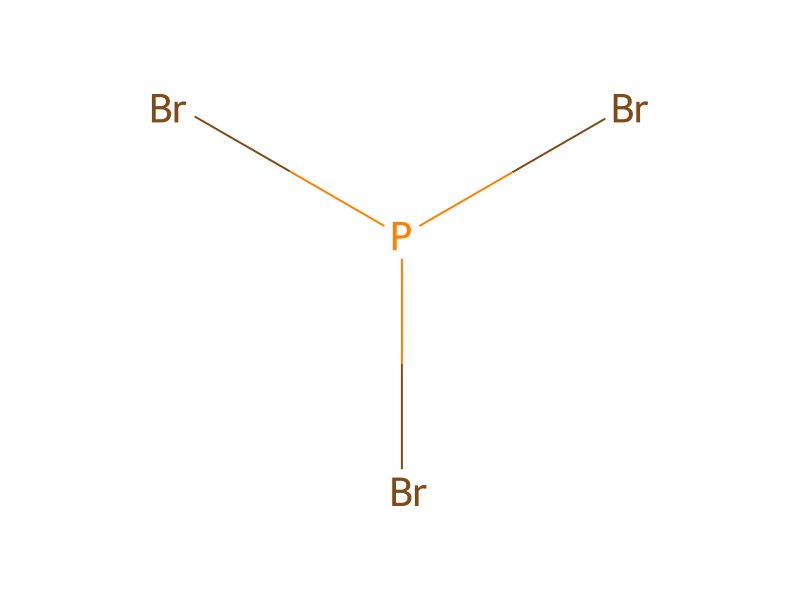

Product 1

Reagents, catalysts & solvents 1

Conditions
- Temperature
- 0 °C
Procedure
In a 500 ml flask, 18.2 g of 1-ethyl-2-(hydroxymethyl)indole-6-carbonitrile was dissolved in 200 ml of dichloromethane and then cooled to 0° C. 3.45 ml of PBr3 was slowly added thereto, and the mixture was stirred for 4 hours at room temperature. dichloromethane was then added and the reaction mixture was washed with aqueous Na2CO3 solution, diluted with water and then extracted three times with dichloromethane. The organic extracts were combined, dried over MgSO4 and then evaporated to obtain 6-cyano-1-ethyl-2-bromomethyl indole. The resulting product was dissolved in 200 ml of toluene and 30.9 g of triphenylphosphine was added thereto. The mixture was stirred for 10 hours at refluxing temperature and then cooled to room temperature. To this reaction solution was added diethyl ether, and the resulting precipitate was then filtered, washed several times with diethyl ether and dried to obtain 29 g of the title compound as a pale brown solid.
Workup
- washthe reaction mixture was washed with aqueous Na2CO3 solution
- additiondiluted with water
- extractionextracted three times with dichloromethane
- dry with materialdried over MgSO4
- customevaporated
Sources & evidence
- ORD record
- ord-a2d898d53f1a42a292dcff92c55fe9ff
- Source dataset
- uspto-grants-2001_03
- Patent number
- US06201006B1
Reaction notes
Loading…