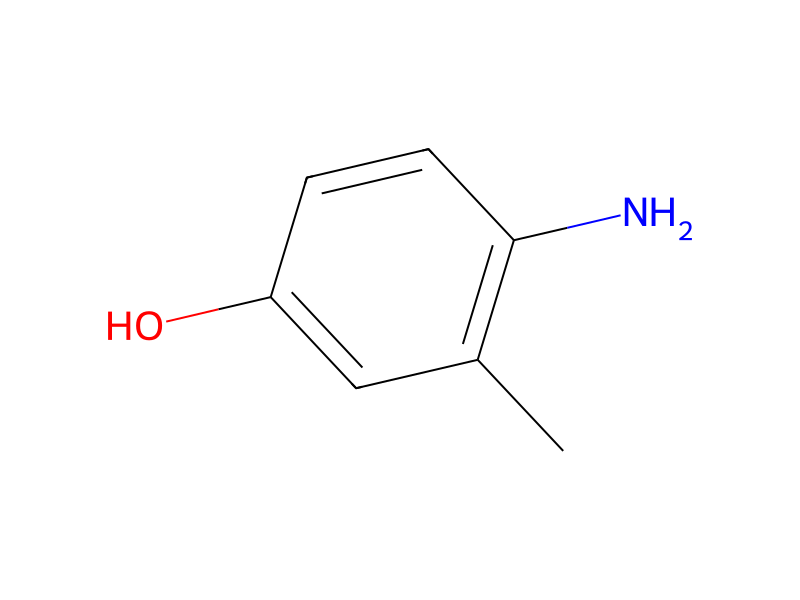
4-Amino-m-cresol → HCID 10020530, compound
Reaction equation

[C:1]([C:6]1[CH:7]=[N:8][C:9]2[C:14]([C:15]=1Cl)=[CH:13][CH:12]=[CH:11][C:10]=2[CH:17]=[CH2:18])(=[O:5])[CH2:2][CH2:3][CH3:4].[NH2:19][C:20]1[C:21]([CH3:27])=[CH:22][C:23]([OH:26])=[CH:24][CH:25]=1>O1CCOCC1>[C:1]([C:6]1[CH:7]=[N:8][C:9]2[C:14]([C:15]=1[NH:19][C:20]1[CH:25]=[CH:24][C:23]([OH:26])=[CH:22][C:21]=1[CH3:27])=[CH:13][CH:12]=[CH:11][C:10]=2[CH:17]=[CH2:18])(=[O:5])[CH2:2][CH2:3][CH3:4]Participants
4
Reactant 2

Product 1

Reagents, catalysts & solvents 1

Procedure
3-Butyryl-4-chloro-8-vinylquinoline (20.0 g, 77 mmol) and 4-amino-m-cresol (9.5 g, 77 mmol) were heated together under reflux in 1,4-dioxan (150 ml) for 2.5 hours. The solvent was evaporated and the residue was dissolved in dichloromethane, washed with water, 2M hydrochloric acid, sodium hydrogen carbonate solution and brine. The solution was dried (anhyd. MgSO4), filtered and evaporated to an oil which was chromatographed (silica gel, 1% methanol in dichloromethane) to give 3-butyryl-4-(4-hydroxy-2-methylphenylamino)-8-vinylquinoline as orange crystals (9.0 g, 32%) m.p. 150°-2°.
Workup
- customThe solvent was evaporated
- dissolutionthe residue was dissolved in dichloromethane
- washwashed with water, 2M hydrochloric acid, sodium hydrogen carbonate solution and brine
- dry with materialThe solution was dried (anhyd. MgSO4)
- filtrationfiltered
- customevaporated to an oil which
- customwas chromatographed (silica gel, 1% methanol in dichloromethane)
Sources & evidence
- ORD record
- ord-22155be3a70742b7bdbb13634e6a4b31
- Source dataset
- uspto-grants-1992_02
- Patent number
- US05089504
Reaction notes
Loading…