Methanol → 3,5-Diphenyl-4-propoxy-1H-pyrazole
Reaction equation

[C:1]1([C:7]2[C:11]([OH:12])=[C:10]([C:13]3[CH:18]=[CH:17][CH:16]=[CH:15][CH:14]=3)[NH:9][N:8]=2)[CH:6]=[CH:5][CH:4]=[CH:3][CH:2]=1.C[O-].[Na+].CO.Br[CH2:25][CH2:26][CH3:27]>BrCCC.O>[C:1]1([C:7]2[C:11]([O:12][CH2:25][CH2:26][CH3:27])=[C:10]([C:13]3[CH:14]=[CH:15][CH:16]=[CH:17][CH:18]=3)[NH:9][N:8]=2)[CH:6]=[CH:5][CH:4]=[CH:3][CH:2]=1Participants

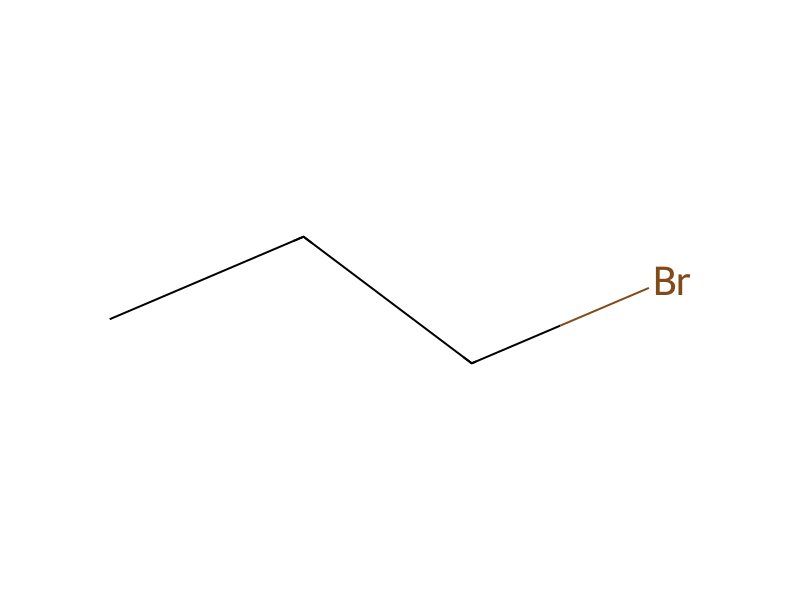




Conditions
- Temperature
- 60 °C
Procedure
A mixture of 3,5-diphenyl-4-pyrazolol (10.0 g, 0.042 mole), sodium methoxide (2.27 g, 0.042 mole) and methanol (60 ml) is heated at 60°C for 2 hours. Then 1-bromopropane (5.17 g, 0.042 mole) is added slowly (5 minutes) at 60°C. The reaction mixture is then held at 60°C for 7 hours, and slowly cooled to room temperature. Examination by glc at this point indicates that the reaction is incomplete. The mixture is heated to 60°C and more 1-bromopropane (0.26 g, 0.002 mole) added. When the reaction is complete (as shown by glc), the mixture is poured into water and the solid formed is isolated by filtration. The solid (11.5 g, 99.7% yield) m.p. 132° and 136°C contains 2 minor impurities as indicated by tlc (benzene/silica gel). Recrystallization from acetonitrile affords white crystals (7.4 g, 63%) m.p. 142° to 142.5°C.
Workup
- temperatureslowly cooled to room temperature
- temperatureThe mixture is heated to 60°C
- customthe solid formed
- customis isolated by filtration
Sources & evidence
- ORD record
- ord-d4fa8b322c0347aba6fd5f009861afc0
- Source dataset
- uspto-grants-1976_09
- Patent number
- US03979409
Reaction notes
Loading…