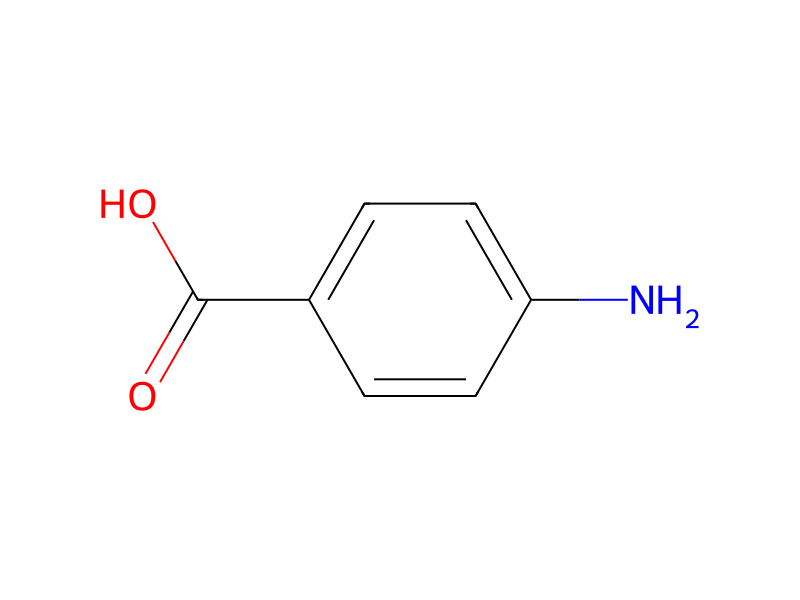
4-Aminobenzoic Acid → 4-Cycloheptanecarbonylamino-benzoic acid
Reaction equation

[NH2:1][C:2]1[CH:10]=[CH:9][C:5]([C:6]([OH:8])=[O:7])=[CH:4][CH:3]=1.[CH:11]1([C:18](Cl)=[O:19])[CH2:17][CH2:16][CH2:15][CH2:14][CH2:13][CH2:12]1>>[CH:11]1([C:18]([NH:1][C:2]2[CH:10]=[CH:9][C:5]([C:6]([OH:8])=[O:7])=[CH:4][CH:3]=2)=[O:19])[CH2:17][CH2:16][CH2:15][CH2:14][CH2:13][CH2:12]1Participants
3


Procedure
4-Cycloheptanecarbonylamino-benzoic acid was prepared as described in Example 3 from 5.55 g (0.0405 mol) of p-aminobenzoic acid and 8.7 g (0.0425 mol) of cycloheptanecarboxylic acid chloride.
Sources & evidence
- ORD record
- ord-020f07f9e66e408e92349f926b6ca8fe
- Source dataset
- uspto-grants-1976_09
- Patent number
- US03982011
Reaction notes
Loading…