2-Thiophenecarboxaldehyde → Benzoxazole, 5-nitro-2-(2-thienyl)-
Reaction equation

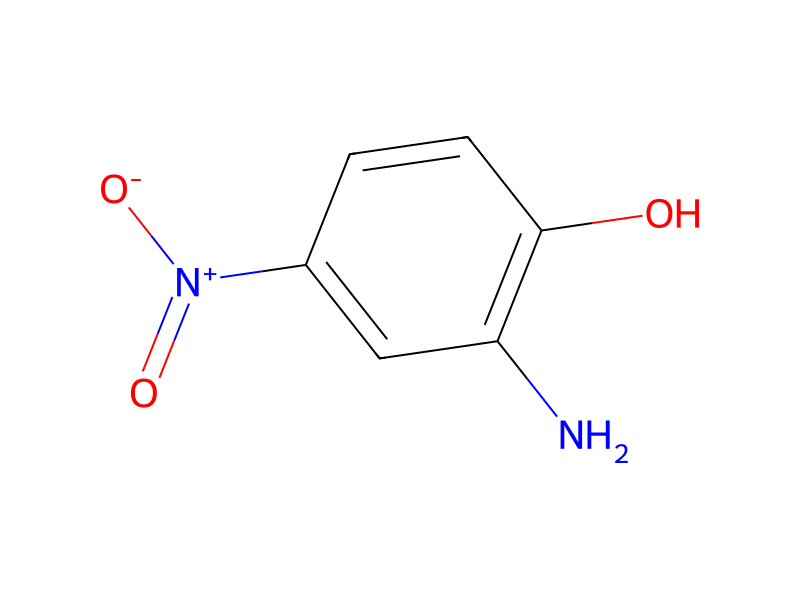
[N+:1]([C:4]1[CH:9]=[CH:8][C:7]([OH:10])=[C:6]([NH2:11])[CH:5]=1)([O-:3])=[O:2].[S:12]1[CH:16]=[CH:15][CH:14]=[C:13]1[CH:17]=O.C([O-])(=O)C.C([O-])(=O)C.C([O-])(=O)C.C([O-])(=O)C.[Pb+4]>C(O)(=O)C.O>[N+:1]([C:4]1[CH:9]=[CH:8][C:7]2[O:10][C:17]([C:13]3[S:12][CH:16]=[CH:15][CH:14]=3)=[N:11][C:6]=2[CH:5]=1)([O-:3])=[O:2]Participants
6





Procedure
15.4 g of 4-nitro-o-aminophenol and 11.2 g of thiophenecarboxaldehyde are dissolved in glacial acetic acid (450 ml) and heated to 85°. 44.4 g of lead tetraacetate is dissolved in 400 ml glacial acetic acid by warming and added to the above solution. Heating is continued for 0.5 hr and the solution is cooled to room temperature, diluted with an equal volume of water and the dark precipitate is collected and washed with additional water. The crude product is dissolved in CH2Cl2 (800 ml) and heated with 2.0 g of "Darco" G-60, followed by evaporation of the CH2Cl2. The resulting material is recrystallized from ethanol-chloroform (3:1) to yield 12.4 g of 5-nitro-2-(2-thienyl)benzoxazole, mp 186°-188°.
Workup
- temperatureheated to 85°
- temperatureby warming
- additionadded to the above solution
- temperatureHeating
- customthe dark precipitate is collected
- washwashed with additional water
- dissolutionThe crude product is dissolved in CH2Cl2 (800 ml)
- temperatureheated with 2.0 g of "Darco" G-60,
- customfollowed by evaporation of the CH2Cl2
- customThe resulting material is recrystallized from ethanol-chloroform (3:1)
Sources & evidence
- ORD record
- ord-cf6536ab87f64c919ff653a780633f6d
- Source dataset
- uspto-grants-1976_09
- Patent number
- US03983130
Reaction notes
Loading…