3-Methoxybenzaldehyde → Ethyl 4-(3-methoxyphenyl)piperidine-3-carboxylate
Reaction equation

[CH3:1][O:2][C:3]1[CH:4]=[C:5]([CH:9]2[CH2:14][CH2:13][N:12](C)[CH2:11][CH:10]2[C:16]([O:18][CH2:19][CH3:20])=[O:17])[CH:6]=[CH:7][CH:8]=1.COC1C=C(C=CC=1)C=O.F[B-](F)(F)F.C[O+](C)C.[BH4-].[Na+]>C(O)C>[CH3:1][O:2][C:3]1[CH:4]=[C:5]([CH:9]2[CH2:14][CH2:13][NH:12][CH2:11][CH:10]2[C:16]([O:18][CH2:19][CH3:20])=[O:17])[CH:6]=[CH:7][CH:8]=1Participants
Reactant 4



Product 1

Reagents, catalysts & solvents 1

Procedure
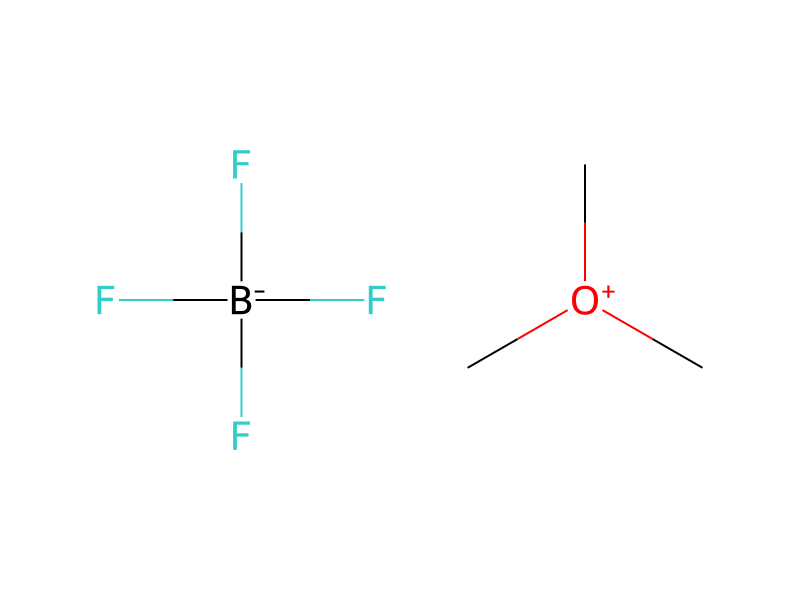
In the preparation of ethyl 4-(3'-methoxyphenyl)-1-methylpiperidine-3-carboxylate (23), a synthesis of 4-aryl 2-unsubstituted nipecotic acids was developed. In this process modifying a known procedure [cf. C. F. Koelsch, J. of the Am. Chem. Soc., 65:2459 (1943)], 3-methoxybenzaldehyde (18) was converted to the amide ester, ethyl 4-(3'-methoxyphenyl)-2-piperidone-5-carboxylate (21), via standard procedures. Selective reduction of the amide function of 21 was achieved by reaction with trimethyloxonium fluoroborate followed immediately by treatment with NaBH4 in ethanol to yield amino ester, ethyl 4-(3'-methoxyphenyl)piperidine-3-carboxylate (22). Reductive methylation gave the required nipecotate 23 in 48% overall yield from 3-methoxybenzaldehyde (18).
Sources & evidence
- ORD record
- ord-0794f21024ef43b4b70655fbf6793ba2
- Source dataset
- uspto-grants-1981_09
- Patent number
- US04289882
Reaction notes
Loading…