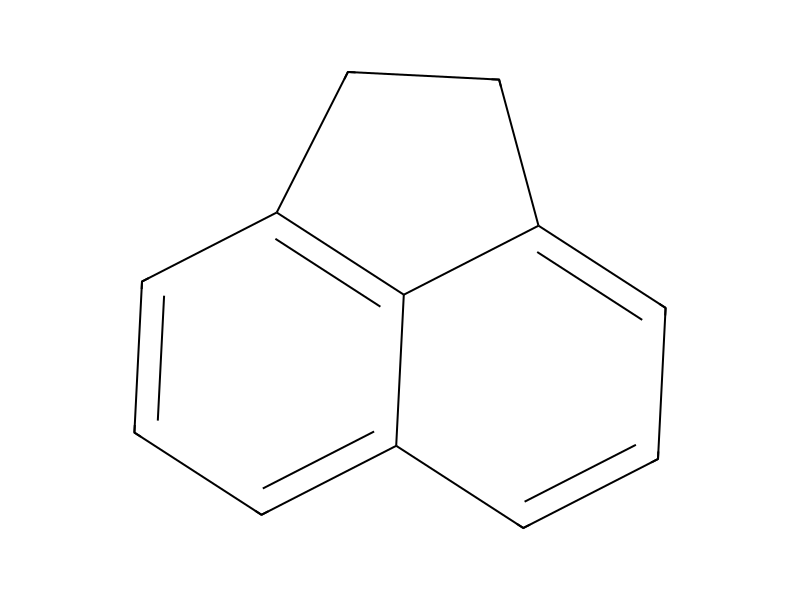
Acenaphthene → 1-o-Tolylbutane-1,3-dione
Reaction equation

C=C1OC(=O)C1.C1C2=[C:18]3[C:13](=CC=C2)[CH:12]=[CH:11][CH:10]=[C:9]3[CH2:8]1.C1C2C3=C4C(=CC=2)C=CC=C4C=CC3=CC=1.COC1C=CC2C(=CC=C(OC)C=2)C=1.[Cl-].[Al+3].[Cl-].[Cl-].CC(=O)C(=O)C.[C:59](F)(=[O:64])[CH2:60][C:61]([CH3:63])=[O:62].[Cl-].[Al+3].[Cl-].[Cl-]>C(Cl)(Cl)Cl.C1(C)C=CC=CC=1.ClCCCl>[C:9]1([CH3:8])[CH:18]=[CH:13][CH:12]=[CH:11][C:10]=1[C:59](=[O:64])[CH2:60][C:61](=[O:62])[CH3:63]Participants
Reactant 7





Product 1

Reagents, catalysts & solvents 3



Procedure
In the reaction of diketene with aromatic compounds that are solid at room temperature, for example acenaphthene, pyrene, or 2,6-dimethoxynaphthalene, solvents have to be added which do not react with diketene. The aforesaid literature references do not contain any description of corresponding experiments. In proper experiments with 1,2-dichloroethane it has been found that with acenaphthene the yield is drastically reduced and resinifications do occur and that the aluminum chloride-butanedione complexes with pyrene have a high stability. If, however, the diketene is transformed into acetoacetyl fluoride which is then reacted with toluene in the presence of aluminum chloride in chloroform, a yield of 6.5 % only of 1-tolyl-butane-1,3-dione is obtained, calculated on the diketene (cf. G. A. Olah and S. J. Kuhn, J.Org. Chem. 26, page 225 (1961)).
Workup
- customat room temperature
- additionto be added which
Sources & evidence
- ORD record
- ord-27bae2eefb1541dfa17a1121c398e84d
- Source dataset
- uspto-grants-1976_02
- Patent number
- US03937737
Reaction notes
Loading…