Water → HCID 21498578, compound
Reaction equation

[OH2:1].[CH2:2]1[O:4][CH2:3]1.[NH:5]1[CH2:10][CH2:9][NH:8][CH:7]2[CH2:11][S:12](=[O:15])(=[O:14])[CH2:13][CH:6]12.[C:16]1([CH3:22])C=CC=CC=1>>[N:5]1([CH2:3][CH2:2][OH:4])[CH2:10][CH2:9][N:8]([CH2:22][CH2:16][OH:1])[CH:7]2[CH2:11][S:12](=[O:15])(=[O:14])[CH2:13][CH:6]12Participants




Procedure
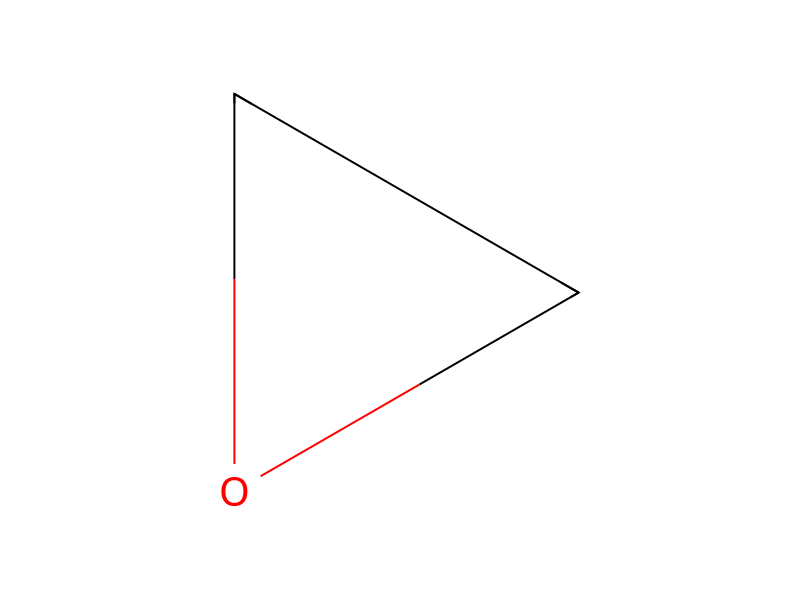
This example illustrates the preparation of a typical diol of this invention using a reactive, watersoluble epoxide. (Water soluble epoxides have at most four carbon atoms). 2.5 ml. (0.05 mole) of ethylene oxide was condensed into a reaction flask and dissolved in 5 ml. of water. To this solution was added gradually at room temperature, a solution of 3.5 g. (0.02 mole) in 5 ml. of water of 1,2,3,4,4a,5,7,7a-octahydrothieno[3,4-b]pyrazine 6,6-dioxide, the diamine of Example 1. After the reaction was complete, the reaction mixture was allowed to cool to room temperature and the waterr and excess epoxide were removed under vacuum, leaving a white solid. Trituration with toluene gave a product, 1,2,3,4,4a,5,7,7a-octahydrothieno[3,4-b]pyrazine 1,4-diethanol 6,6-dioxide, M.P. 145°-147°C. IR spectrum showed bands at 3300 cm-1, broad (OH) at 1285 cm-1 and 1125 cm-1 (SO2) and at 1010 cm-1 (CO).
Workup
- customcondensed into a reaction flask
- dissolutiondissolved in 5 ml
- additionTo this solution was added gradually at room temperature
- customthe waterr and excess epoxide were removed under vacuum
- customleaving a white solid
Sources & evidence
- ORD record
- ord-afde315360f545919f46a36f28e08bf2
- Source dataset
- uspto-grants-1976_02
- Patent number
- US03940396
Reaction notes
Loading…