Water → HCID 23344798, compound
Reaction equation

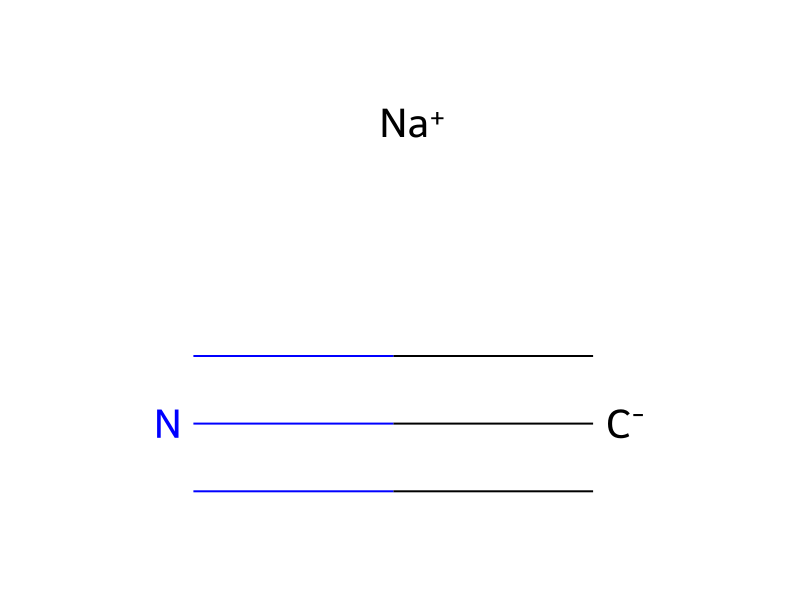
Cl.[C:2]([NH:6][NH2:7])([CH3:5])([CH3:4])[CH3:3].[C-:8]#[N:9].[Na+].O.[C:12]1(=O)[CH2:17][CH2:16][CH2:15][CH2:14][CH2:13]1>C(O)C>[C:2]([NH:6][NH:7][C:12]1([C:8]#[N:9])[CH2:17][CH2:16][CH2:15][CH2:14][CH2:13]1)([CH3:5])([CH3:4])[CH3:3]Participants
Reactant 4



Product 1

Reagents, catalysts & solvents 1

Procedure
To a rapidly stirred solution of 24.8 grams (0.2 mole) of t-butylhydrazine hydrochloride and 9.8 grams (0.2 mole) of sodium cyanide in 100 ml. of deionized water in a 250 ml. 4-neck round bottom flask, was added a solution of 19.6 grams (0.2 mole) of cyclohexanone in 15 ml. of ethanol. The reaction was stirred for 5 hours at room temperature and then allowed to stand overnight. The next morning the reaction was stirred an additional hour and filtered. The product was dried at 30°C. in a vacuum oven and the yield was 36.3 grams (93.5%) of a white solid melting at 70°-73°C. The white solid evolves HCN on exposure to air over extended periods. The infrared spectrum contained strong NH bands, a cyano band, and did not contain any carbonyl or imino bands. The infrared spectrum was thus consistent with the structure of the desired hydrazo product.
Workup
- waitto stand overnight
- stirringThe next morning the reaction was stirred an additional hour
- filtrationfiltered
- customThe product was dried at 30°C. in a vacuum oven
- waitThe white solid evolves HCN on exposure to air over extended periods
Sources & evidence
- ORD record
- ord-a0ad2cbe8d1c4474ab4c0ae2bc7e22d7
- Source dataset
- uspto-grants-1976_01
- Patent number
- US03931143
Reaction notes
Loading…