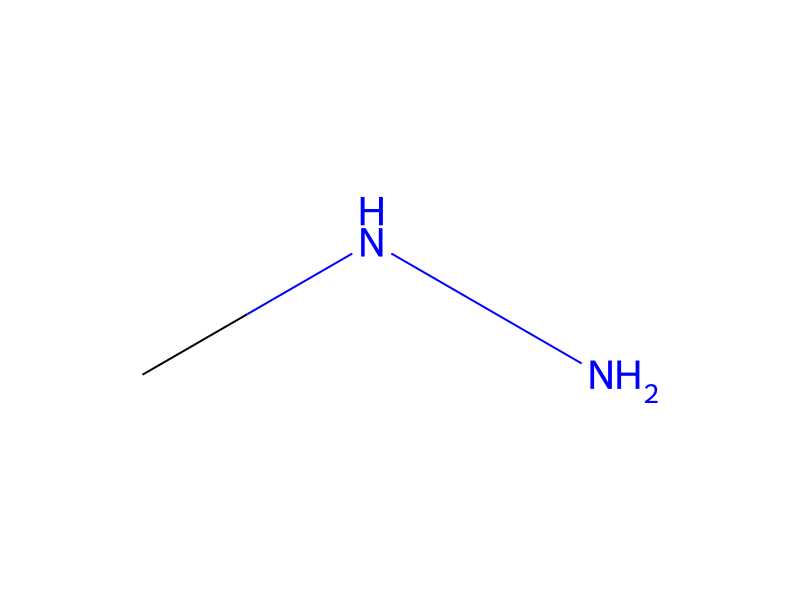
Methylhydrazine → N-(5-Cyclobutyl-1,3,4-thiadiazol-2-yl)-1-methylhydrazine-1-carboxamide
Reaction equation

[CH3:1][NH:2][NH2:3].[CH:4]1([C:8]2[S:12][C:11]([N:13]=[C:14]=[O:15])=[N:10][N:9]=2)[CH2:7][CH2:6][CH2:5]1.NN>C(Cl)Cl>[CH3:1][N:2]([C:14]([NH:13][C:11]1[S:12][C:8]([CH:4]2[CH2:5][CH2:6][CH2:7]2)=[N:9][N:10]=1)=[O:15])[NH2:3]Participants
5




Procedure
A solution of methylhydrazine (0.3 mole) in methylene chloride (150 ml) is charged into a glass reaction vessel equipped with a mechanical stirrer, thermometer and reflux condenser. 5-Cyclobutyl-1,3,4-thiadiazol-2-yl isocyanate dimer (0.1 mole) is then added, with stirring, at room temperature. After the addition is completed the reaction mixture is heated at reflux for a period of about 4 hours. After this time the reaction mixture is stripped of solvent and excess hydrazine to yield the desired product 2-methyl-4-(5-cyclobutyl-1,3,4-thiadiazol-2-yl)semicarbazide.
Workup
- customequipped with a mechanical stirrer
- temperaturethermometer and reflux condenser
- additionAfter the addition
- temperatureis heated
- temperatureat reflux for a period of about 4 hours
Sources & evidence
- ORD record
- ord-6fb54ecde6ef4bb9b536c047bdfd6033
- Source dataset
- uspto-grants-1976_01
- Patent number
- US03931209
Reaction notes
Loading…