1,5-Dibromopentane → 2-(5-Bromopentyl)benzo[de]isoquinoline-1,3-dione
Reaction equation

Cl.C1(C2CCN(C[CH2:15][CH2:16][CH2:17][CH2:18][CH2:19][N:20]3[C:29](=[O:30])[C:28]4[CH:31]=[CH:32][CH:33]=[C:26]5[C:27]=4[C:22](=[CH:23][CH:24]=[CH:25]5)[C:21]3=[O:34])CC=2)C=CC=CC=1.[Br:35]CCCCCBr.BrCCCCCCBr>>[Br:35][CH2:15][CH2:16][CH2:17][CH2:18][CH2:19][N:20]1[C:29](=[O:30])[C:28]2[CH:31]=[CH:32][CH:33]=[C:26]3[C:27]=2[C:22](=[CH:23][CH:24]=[CH:25]3)[C:21]1=[O:34]Participants
4



Procedure
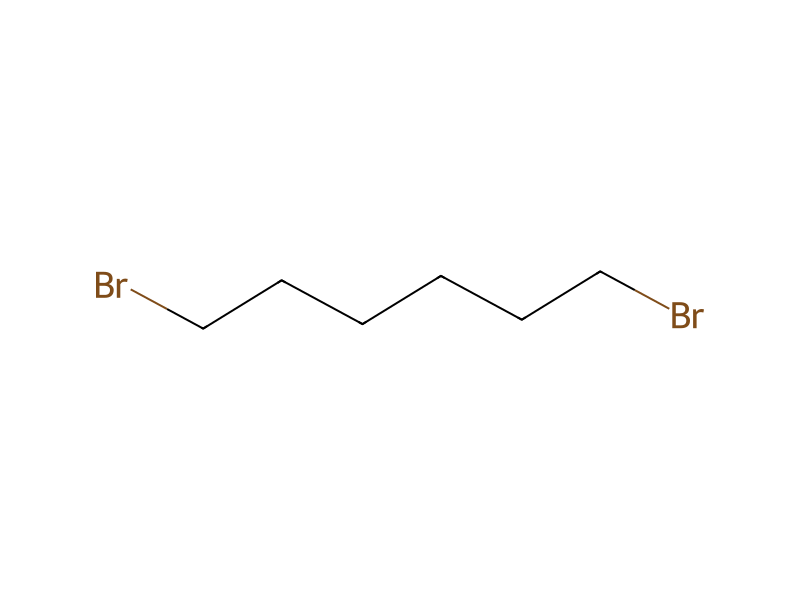
Following the procedure of part (a) of Example 56 but substituting 1,5-dibromopentane for the 1,6-dibromohexane, one obtains 2-(5-bromopentyl)-1H-benz[de]isoquinoline-1,3(2H)-dione; m.p. 113°-115°.
Sources & evidence
- ORD record
- ord-d4ab08c4da2447ceac93e964478809c9
- Source dataset
- uspto-grants-1976_01
- Patent number
- US03935227
Reaction notes
Loading…