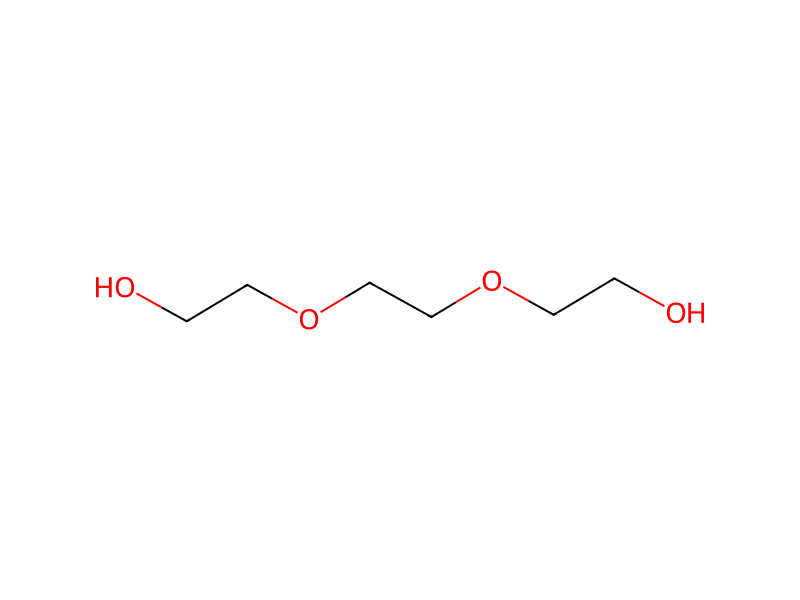
Triethylene Glycol → Pyridine, 4-undecyl-
Reaction equation

[C:1]([C:13]1[CH:18]=[CH:17][N:16]=[CH:15][CH:14]=1)(=O)[CH2:2][CH2:3][CH2:4][CH2:5][CH2:6][CH2:7][CH2:8][CH2:9][CH2:10][CH3:11].NN.[OH-].[K+].C(O)COCCOCCO>O>[CH2:1]([C:13]1[CH:14]=[CH:15][N:16]=[CH:17][CH:18]=1)[CH2:2][CH2:3][CH2:4][CH2:5][CH2:6][CH2:7][CH2:8][CH2:9][CH2:10][CH3:11]Participants
6
Reactant 4



Product 1

Reagents, catalysts & solvents 1

Procedure
A mixture of 8.50 g (34 mmol) of 4-n-undecanoylpyridine, 5.55 g (0.11 mol) of hydrazine.monohydrate, 4.41 g (74 mmol) of potassium hydroxide, and 30 ml of triethylene glycol was heated at 110° to 125° C. for one hour, and further, at 180° to 185° C. for 4 hours. After cooling, 50 ml of water was added, and the mixture was extracted with diethyl ether, washed with water and then dried over anhydrous potassium carbonate. After concentration under a reduced pressure, the residue was purified by distillation under a reduced pressure to give 6.40 g of the desired product (yield 79.8%).
Workup
- temperatureAfter cooling
- extractionthe mixture was extracted with diethyl ether
- washwashed with water
- dry with materialdried over anhydrous potassium carbonate
- concentrationAfter concentration under a reduced pressure
- distillationthe residue was purified by distillation under a reduced pressure
Sources & evidence
- ORD record
- ord-b4b38eb3dc5d48e28184f96f6463e484
- Source dataset
- uspto-grants-1993_06
- Patent number
- US05219847
Reaction notes
Loading…