1,4-Dioxane hydrochloride → HCID 131717998, compound
Reaction equation

[CH2:1]([O:8][C:9](=[O:39])[C@H:10]([CH:36]([CH3:38])[CH3:37])[NH:11][C:12](=[O:35])[C@@H:13]([CH2:31][CH:32]([CH3:34])[CH3:33])[NH:14]C(=O)C(O)C1CCCN1C(OC(C)(C)C)=O)[C:2]1[CH:7]=[CH:6][CH:5]=[CH:4][CH:3]=1.[ClH:40].O1CCOCC1>ClCCl>[ClH:40].[CH2:1]([O:8][C:9](=[O:39])[C@H:10]([CH:36]([CH3:38])[CH3:37])[NH:11][C:12](=[O:35])[C@H:13]([CH2:31][CH:32]([CH3:33])[CH3:34])[NH2:14])[C:2]1[CH:3]=[CH:4][CH:5]=[CH:6][CH:7]=1Participants
4
Reactant 2
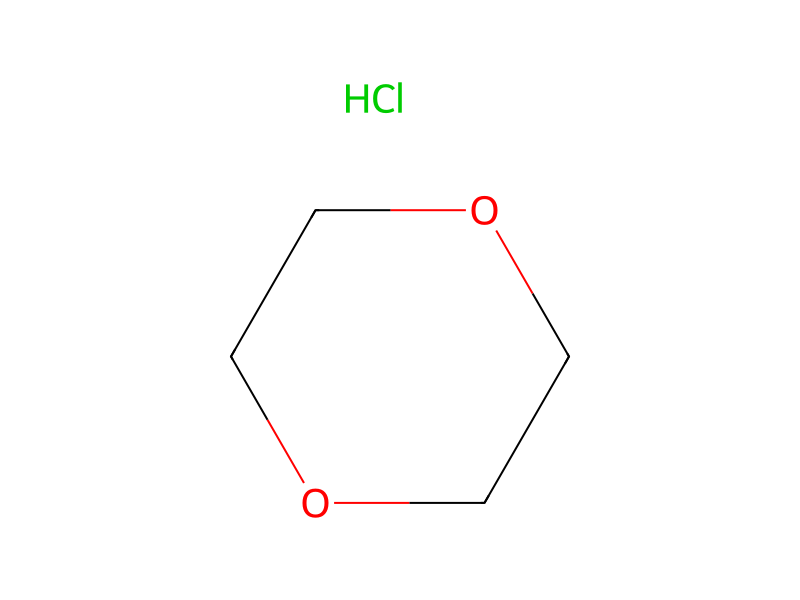

Product 1

Reagents, catalysts & solvents 1

Procedure
[2-Hydroxy-2-(N-t-butyloxycarbonylpyrrolidin-2-yl)acetyl]-D-leucylvaline benzyl ester (200 mg) was added to dry dichloromethane (1 ml) and 4N hydrochloric acid/dioxane (1 ml) was added to the solution under cooling with ice to conduct a reaction at room temperature for 1.5 h. The reaction liquid was concentrated under reduced pressure and the residue was washed with n-hexane and dried to give 2-hydroxy-2-(pyrrolidin-2-yl)acetyl]-D-leucylvaline benzyl ester hydrochloride.
Workup
- additionwas added to the solution
- temperatureunder cooling with ice
- customa reaction at room temperature for 1.5 h
- customThe reaction liquid
- concentrationwas concentrated under reduced pressure
- washthe residue was washed with n-hexane
- customdried
Sources & evidence
- ORD record
- ord-72d44d292c22496e96da998e7f01f4a3
- Source dataset
- uspto-grants-1993_06
- Patent number
- US05221752
Reaction notes
Loading…