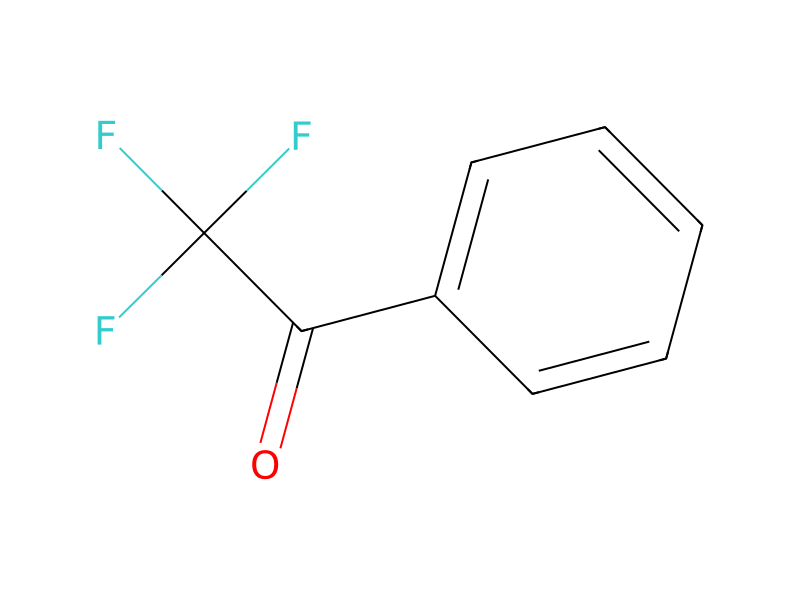
2,2,2-Trifluoroacetophenone → 9-Phenyl-9-trifluoromethyl-2,7-dimethylxanthene
Reaction equation

[C:1]1([CH3:15])[CH:6]=[CH:5][C:4]([O:7][C:8]2[CH:13]=[CH:12][C:11]([CH3:14])=[CH:10][CH:9]=2)=[CH:3][CH:2]=1.[F:16][C:17]([C:20]([C:22]1[CH:27]=[CH:26][CH:25]=[CH:24][CH:23]=1)=O)([F:19])[F:18]>>[C:22]1([C:20]2([C:17]([F:16])([F:18])[F:19])[C:5]3[CH:6]=[C:1]([CH3:15])[CH:2]=[CH:3][C:4]=3[O:7][C:8]3[C:13]2=[CH:12][C:11]([CH3:14])=[CH:10][CH:9]=3)[CH:27]=[CH:26][CH:25]=[CH:24][CH:23]=1Participants
3


Procedure
The parent monomer (II, Rf =CF3) was prepared (Scheme VI) using the single-bridging process by reaction of p-tolyl ether (X) and trifluoromethylphenyl ketone in HF at 130° C. to provide 9-phenyl-9-trifluoromethyl-2,7-dimethylxanthene (XIX), followed by oxidation to the dicarboxylic acid (XX) and catalytic decarboxylation to (II). The diacid (XX) could also be converted to the diacyl chloride (XXI), then to the diacyl azide and, finally, to the diisocyanate (XXII) as previously described.
Sources & evidence
- ORD record
- ord-0a5b56b15120418d99bb26ef059709f2
- Source dataset
- uspto-grants-1993_04
- Patent number
- US05202446
Reaction notes
Loading…