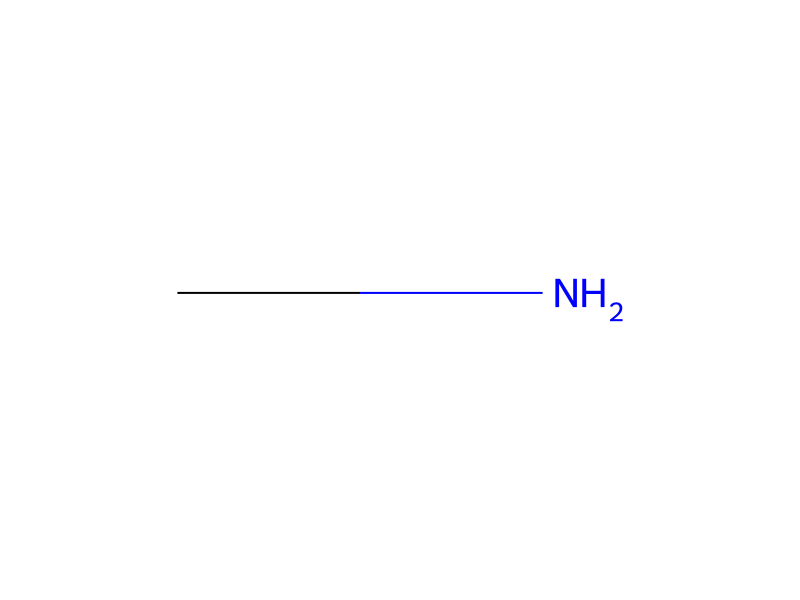
Methylamine → 3-Bromo-N-methyl-5-nitrobenzamide
Reaction equation

[Br:1][C:2]1[CH:3]=[C:4]([CH:8]=[C:9]([N+:11]([O-:13])=[O:12])[CH:10]=1)[C:5](O)=[O:6].C(Cl)(=O)C(Cl)=O.[CH3:20][NH2:21]>C(Cl)Cl.CN(C=O)C.C1COCC1>[Br:1][C:2]1[CH:3]=[C:4]([CH:8]=[C:9]([N+:11]([O-:13])=[O:12])[CH:10]=1)[C:5]([NH:21][CH3:20])=[O:6]Participants






Procedure
To a solution of 3-bromo-5-nitrobenzoic acid (17.7 g) and oxalyl chloride (2 equiv.) in 250 mL of anhydrous CH2Cl2 was added a few drops of DMF, and the mixture was stirred for 2 hrs at room temperature. It was concentrated in vacuo, then reconcentrated in vacuo twice from 400 mL of toluene to remove excess oxalyl chloride. The residue was dissolved in 100 mL of anhydrous THF. In a separated flask methylamine (3 equiv.) was dissolved in 100 ml of anhydrous THF and cooled to 0° C. Then the acid chloride solution was added dropwise, causing a white solid to precipitate. The mixture was allowed to stir at room temperature for 16 hrs, and the solids were removed by filtration. The filtrate was concentrated in vacuo to provide a white solid, which was triturated with diethyl ether, collected by filtration to yield 3-bromo-N-methyl-5-nitrobenzamide. NMR (300 MHz, DMSO-d6) δ 9.92 (m, 1H), 8.64 (s, 1H), 8.53 (s, 1H), 8.43 (s, 1H), 2.81 (d, 3H, J=7 Hz).
Workup
- concentrationIt was concentrated in vacuo
- customto remove excess oxalyl chloride
- dissolutionThe residue was dissolved in 100 mL of anhydrous THF
- temperaturecooled to 0° C
- customto precipitate
- stirringto stir at room temperature for 16 hrs
- customthe solids were removed by filtration
- concentrationThe filtrate was concentrated in vacuo
- customto provide a white solid, which
- customwas triturated with diethyl ether
- filtrationcollected by filtration
Sources & evidence
- ORD record
- ord-c9e5b8f7e9fa4856adbb1fb24f4766b6
- Source dataset
- uspto-grants-2007_11
- Patent number
- US07291744B2
Reaction notes
Loading…