Water → n-Decylacrylamide Acrylamid
Reaction equation

[C:1]([NH2:5])(=[O:4])[CH:2]=[CH2:3].[CH2:6]([C:16](=[CH2:20])[C:17]([NH2:19])=[O:18])[CH2:7][CH2:8][CH2:9][CH2:10][CH2:11][CH2:12][CH2:13][CH2:14][CH3:15].C(C1C=CC=CC=1C=C)=C.O>C(O)C>[C:1]([NH2:5])(=[O:4])[CH:2]=[CH2:3].[CH2:6]([C:16](=[CH2:20])[C:17]([NH2:19])=[O:18])[CH2:7][CH2:8][CH2:9][CH2:10][CH2:11][CH2:12][CH2:13][CH2:14][CH3:15]Participants
6
Reactant 4


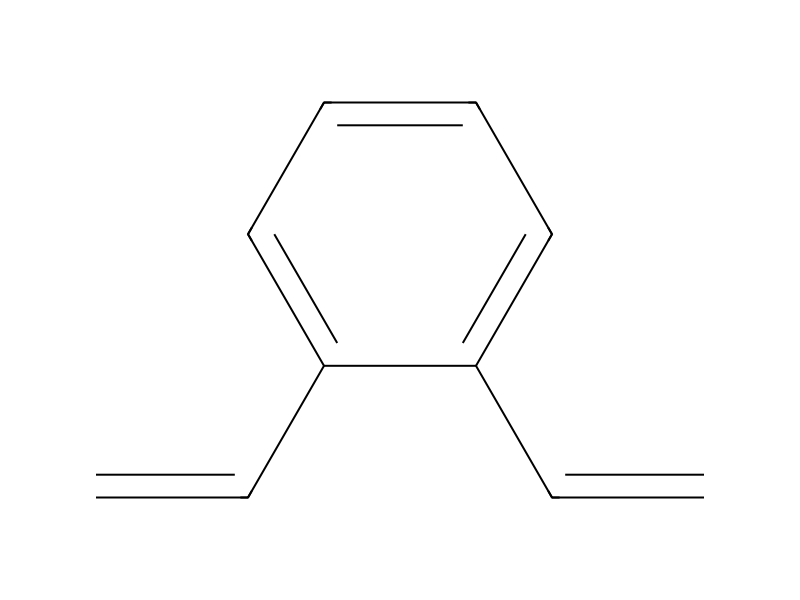

Product 1

Reagents, catalysts & solvents 1

Procedure
Polystyrenesulfonate (22.5 mmoles, 3.918 g), acrylamide (3.45 mmoles, 0.245 g), n-decylacrylamide (3.45 mmoles, 0.729 g) and divinylbenzene (0.6 mmoles, 85.5 microL) were dissolved in 15 mL ethanol and 5 mL water in a 40 mL vial fitted with a septa cap. The solution was degassed by bubbling nitrogen through and 1 mole % AIBN was added as a solution. The polymerization solution was further degassed and the placed in a heated reaction block at 60° C. for 18 h. A creamy yellow gel formed.
Workup
- customThe solution was degassed
- customby bubbling nitrogen through and 1 mole % AIBN
- additionwas added as a solution
- customThe polymerization solution was further degassed
- customthe placed in a heated reaction block at 60° C. for 18 h
- customA creamy yellow gel formed
Sources & evidence
- ORD record
- ord-1837cbd58426404a81e9dc27d59f63e4
- Source dataset
- uspto-grants-2001_09
- Patent number
- US06290946B1
Reaction notes
Loading…