Water → Propylene Oxide
Reaction equation

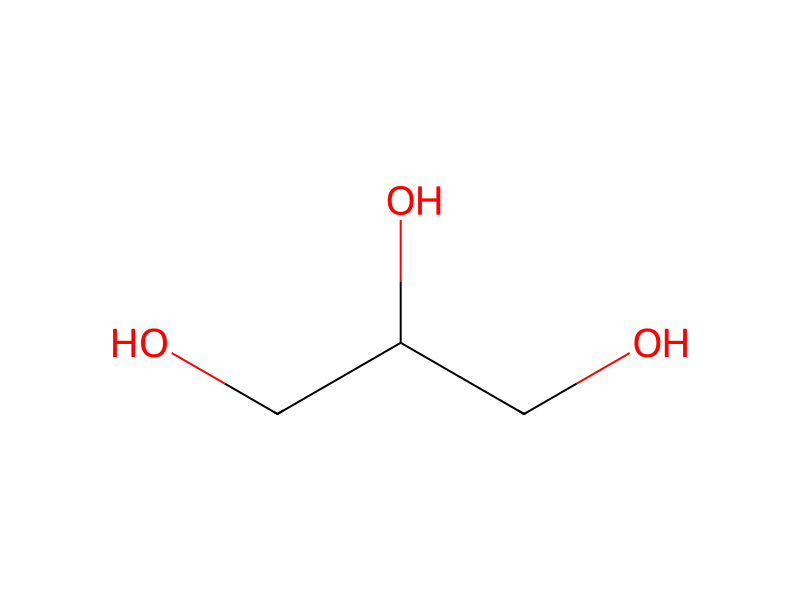
[O:1]1[CH:3]([CH2:4][CH2:5][CH2:6][CH2:7][CH2:8][CH2:9][CH2:10][CH2:11][CH2:12][CH2:13][CH2:14][CH2:15][CH2:16][CH2:17][CH2:18][CH3:19])[CH2:2]1.[Si]([O-])([O-])([O-])[O-].[Mg+2].[Mg+2].O>OCC(CO)O>[CH2:2]1[O:1][CH:3]1[CH3:4].[O:1]1[CH:3]([CH2:4][CH2:5][CH2:6][CH2:7][CH2:8][CH2:9][CH2:10][CH2:11][CH2:12][CH2:13][CH2:14][CH2:15][CH2:16][CH2:17][CH2:18][CH3:19])[CH2:2]1Participants
6
Reactant 3



Product 2

Reagents, catalysts & solvents 1
Conditions
- Temperature
- 120 °C
Procedure
Thereafter, 1,2-epoxyoctadecane (385 parts) is added to the vessel with stirring and heating at 125° C. to 135° C. continued for another three hours or until at least 95% of the 1,2-epoxyoctadecane has reacted. The resulting product is treated with magnesium silicate (5% by weight) and water (1% by weight), heated at 120° C. for two hours, and filtered to remove residual potassium catalyst. Residual volatiles are removed by steam vacuum distillation (200°-205° C., 10 mm Hg vacuum, 3 parts water per part alkoxylated alcohol) to yield an alkoxylated alcohol containing an average of about 5 equivalents of reacted propylene oxide and 3 equivalents of reacted 1,2-epoxyoctadecane per equivalent of glycerin.
Workup
- temperatureheating at 125° C. to 135° C.
- customhas reacted
- filtrationfiltered
- customto remove residual potassium catalyst
- customResidual volatiles are removed by steam vacuum distillation (200°-205° C., 10 mm Hg vacuum, 3 parts water per part alkoxylated alcohol)
Sources & evidence
- ORD record
- ord-4ea9a706c371418ea407947cb7ae2e51
- Source dataset
- uspto-grants-1998_04
- Patent number
- US05736174
Reaction notes
Loading…