Sodium hydride → Methyl N-[4-(benzoxazol-2-ylmethoxy)-2-methylphenyl]carbamate
Reaktionsgleichung

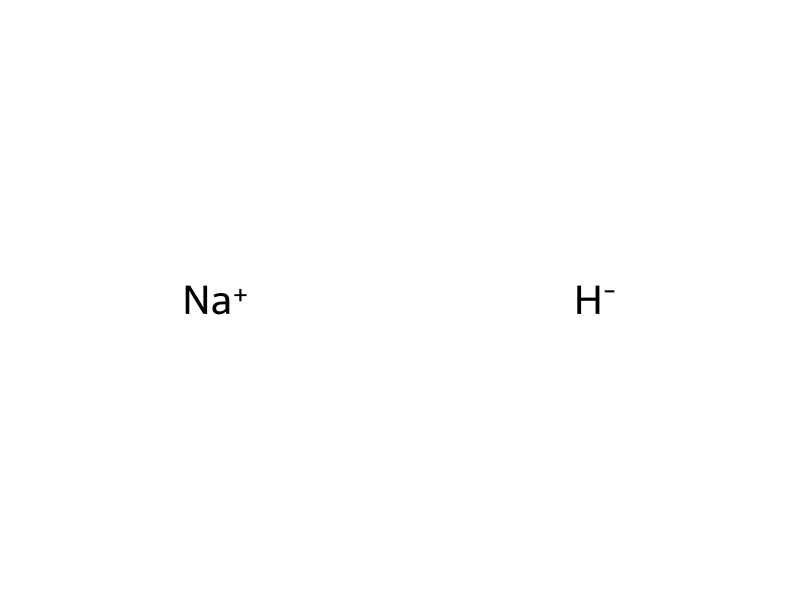
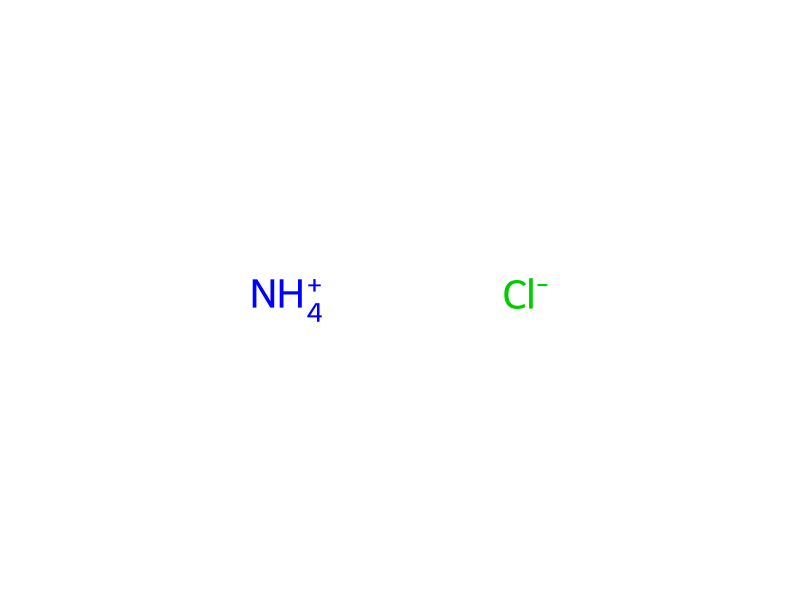
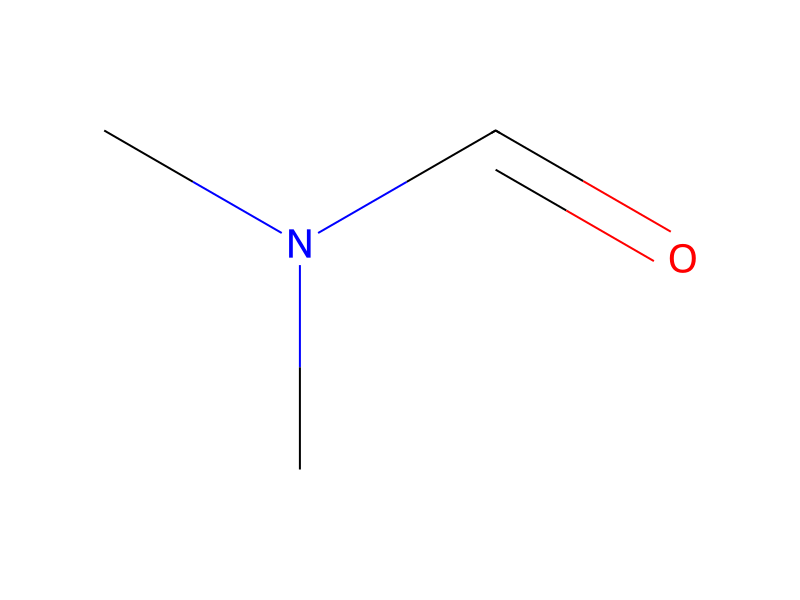
[H-].[Na+].[OH:3][C:4]1[CH:9]=[CH:8][C:7]([NH:10][C:11](=[O:14])[O:12][CH3:13])=[C:6]([CH3:15])[CH:5]=1.Br[CH2:17][C:18]1[O:19][C:20]2[CH:26]=[CH:25][CH:24]=[CH:23][C:21]=2[N:22]=1.[Cl-].[NH4+]>CN(C)C=O>[O:19]1[C:20]2[CH:26]=[CH:25][CH:24]=[CH:23][C:21]=2[N:22]=[C:18]1[CH2:17][O:3][C:4]1[CH:9]=[CH:8][C:7]([NH:10][C:11](=[O:14])[O:12][CH3:13])=[C:6]([CH3:15])[CH:5]=1Komponenten
Edukt 4


Produkt 1

Reagenzien, Katalysatoren, Lösungsmittel 1
Versuchsvorschrift
52.8 mg of sodium hydride (as a 60% w/w dispersion in mineral oil) were added to a solution of 200 mg of methyl N-(4-hydroxy-2-methylphenyl)carbamate [prepared as described in Example 15(a) above] in 5 ml of dimethylformamide cooled in an ice-water bath. The resulting mixture was stirred at the same temperature for 5 minutes, and then 305.4 mg of 2-bromomethylbenzoxazole [prepared as described in step (a) above] were added. The temperature of the resulting mixture was elevated to room temperature and the mixture was stirred for 20 minutes. At the end of this time, the temperature of the reaction mixture was elevated to 50° C. and the mixture was stirred for a further 1 hour. A saturated aqueous ammonium chloride solution was then added to the reaction mixture and the resulting mixture was extracted with ethyl acetate. The resulting extract was washed consecutively with water and a saturated aqueous sodium chloride solution and then dried over anhydrous sodium sulfate. The solvent was then removed by evaporation under reduced pressure to give a crude crystalline solid which was purified by column chromatography through silica gel using a 2:1 by volume mixture of hexane and ethyl acetate as the eluent, to give 320.4 mg (yield 85.5%) of the title compound as a solid having a melting point of 159° to 162° C.
Aufarbeitung
- temperaturecooled in an ice-water bath
- customwas elevated to room temperature
- stirringthe mixture was stirred for 20 minutes
- customwas elevated to 50° C.
- stirringthe mixture was stirred for a further 1 hour
- extractionthe resulting mixture was extracted with ethyl acetate
- extractionThe resulting extract
- washwas washed consecutively with water
- dry with materiala saturated aqueous sodium chloride solution and then dried over anhydrous sodium sulfate
- customThe solvent was then removed by evaporation under reduced pressure
- customto give a crude crystalline solid which
- customwas purified by column chromatography through silica gel using a 2:1
- additionby volume mixture of hexane and ethyl acetate as the eluent
Quellen und Nachweise
- ORD-Eintrag
- ord-4c9f6ffcbfdd425ba448edffe6e5e66f
- Quelldatensatz
- uspto-grants-1998_04
- Patentnummer
- US05736487
Notizen zur Reaktion
Wird geladen…