Chromium oxide → Bismuth oxide antimony oxide chromium oxide
Reaction equation

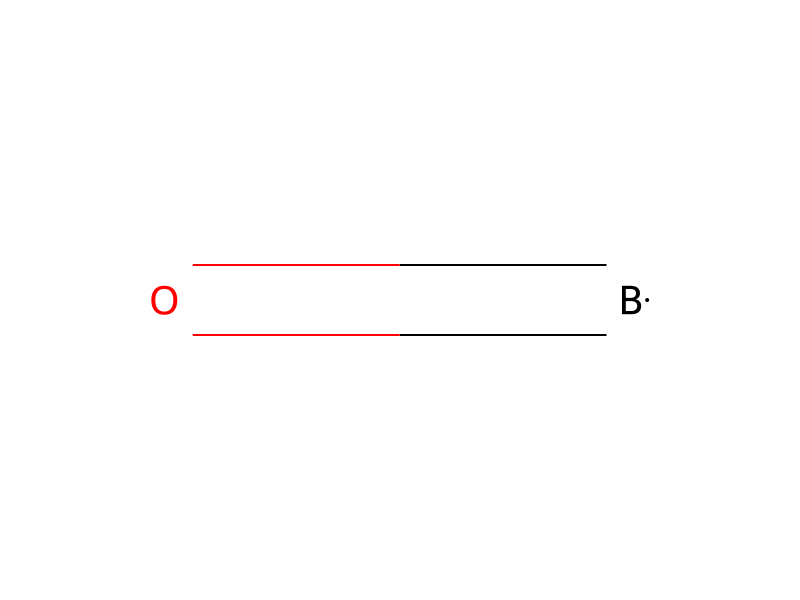
[Bi:1]=[O:2].[Sb:3]=[O:4].[B]=O.[O-2].[Cr+3:8].[O-2].[O-2].[Cr+3]>>[Bi:1]=[O:2].[Sb:3]=[O:4].[O-2:2].[Cr+3:8].[O-2:2].[O-2:2].[Cr+3:8]Participants



Procedure
A bismuth oxide powder (whose average particle size is about 2 to 3 μm), an antimony oxide powder (whose average particle size is about 2 to 3 μm) and a boron oxide fine powder (whose average particle size is about 2 to 3 μm) were mixed at a weight of 97.5:2:0.5. The mixed powder was heat treated at a temperature of 450° C. for 5 hrs. in the air. Further, a bismuth oxide powder a chromium oxide fine powder (whose average particle size is about 0.5 to 1.5 μm) were mixed at a weight ratio of 75:25. The mixed powder was heat treated at a temperature of 550° C. for 5 hrs. These were blended at a weight ratio of 10:1 and ground fine. Consequently, a synthetic powder of bismuth oxide/antimony oxide/chromium oxide (whose average particle size is about 2 to 3 μm) was obtained.
Workup
- temperatureThe mixed powder was heat
- additiontreated at a temperature of 450° C. for 5 hrs
- temperatureThe mixed powder was heat
- additiontreated at a temperature of 550° C. for 5 hrs
Sources & evidence
- ORD record
- ord-cd0bf316cdaf486197c3b504e3af1e5f
- Source dataset
- uspto-grants-1998_04
- Patent number
- US05739742
Reaction notes
Loading…