M-Xylene → Methyl isobutyrate
Reaction equation

[H][H].[CH3:3][CH:4]1[CH2:9][CH2:8][O:7][C:5]1=[O:6].C1(C)C=CC=C(C)C=1>[Cu].[Cr]([O-])([O-])=O.CO>[CH3:3][CH:4]1[CH2:9][CH2:8][O:7][CH2:5]1.[CH3:3][CH:4]1[CH2:9][CH2:8][O:7][C:5]1=[O:6].[C:5]([O:7][CH3:8])(=[O:6])[CH:4]([CH3:9])[CH3:3]Participants
Reactant 3

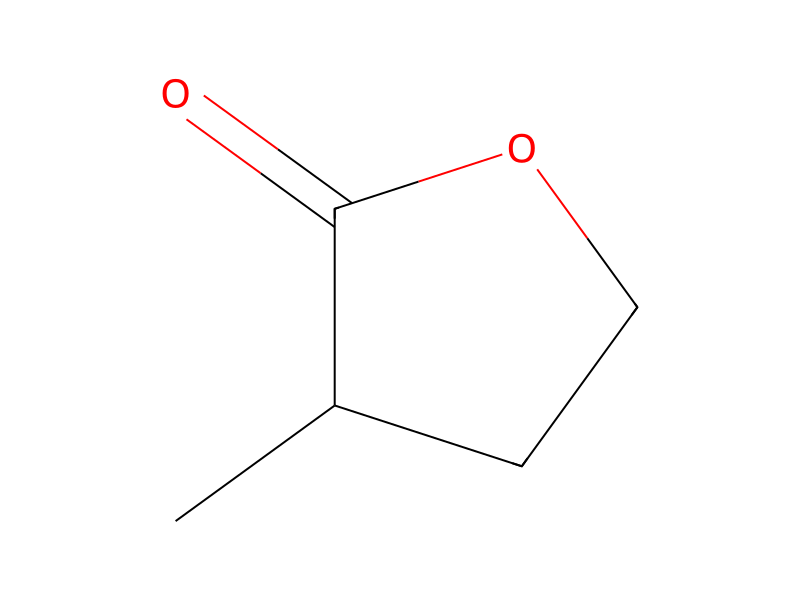
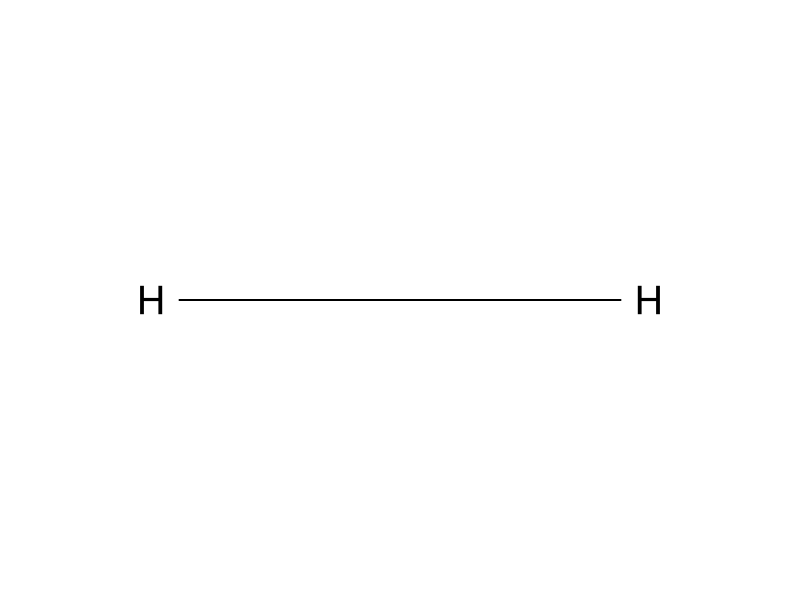
Product 3

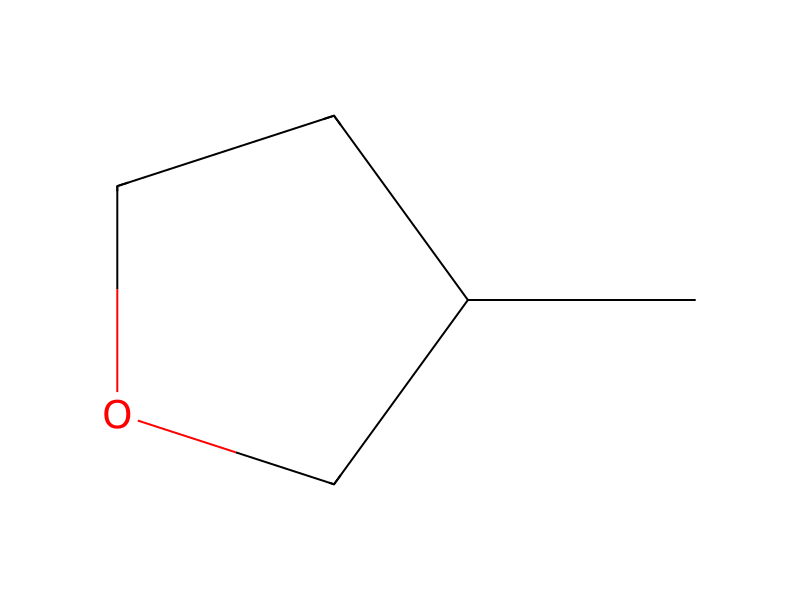
Reagents, catalysts & solvents 2

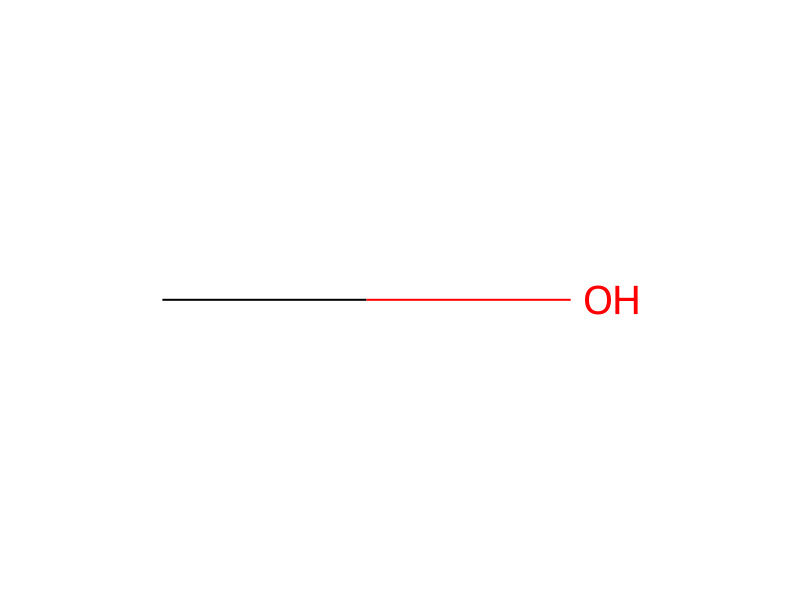
Procedure
A stainless steel-made tubular reactor to be used as a hydrogenation reactor having an inside diameter of 15 mm and a length of 300 mm was packed inside with 10 g of copper-chromite as the catalyst roughly uniformized in particle size of 10 to 20 mesh (produced by Nissan Girdler Catalyst Co.,Ltd. under the trade name: G-99C in the form of pellets). Subsequently, a catalyst reduction was carried out at 150 to 200° C. by passing through the reactor, hydrogen gas diluted with nitrogen to 0.5 to 5% by volume by the conventional method with sufficient care not to form a hot spot. Thereafter, the feed gas to the reactor was switched to pure hydrogen at a pressure of 70 kg/cm2G, a purge gas SV of 500 hr-1 and a catalyst bed temperature of 230° C. Then, the tubular reactor was charged at an upper portion thereof with a starting material for reaction consisting of a solution of 30 parts by weight of 2-methyl-γ-butyrolactone which had been obtained in Example 3 in 70 parts by weight of m-xylene at a rate of 3.3 g per hour. The effluent through a lower portion thereof was cooled and degasified to collect the reaction product. After the lapse of 5 hours from the start of the reaction, the reaction product was collected for one hour and analyzed by gas chromatography. As a result, the objective 3-methyltetrahydrofuran was obtained in a yield of 90.1% in a conversion efficiency of 2-methyl-γ-butyro-lactone of 100% in a yield of 0.5% methyl isobutyrate, while methanol was not detected in the reaction product throughout the reaction period.
Workup
- customto be used as a hydrogenation reactor
- customproduced by Nissan Girdler Catalyst Co.,Ltd
- customwas carried out at 150 to 200° C.
- additiondiluted with nitrogen to 0.5 to 5% by volume by the conventional method with sufficient care not
- customto form a hot spot
- customa purge gas SV of 500 hr
- customa catalyst bed temperature of 230° C
- additionThen, the tubular reactor was charged at an upper portion
- customwith a starting material for reaction
- temperatureThe effluent through a lower portion thereof was cooled
- customto collect the reaction product
- customAfter the lapse of 5 hours from the start of the reaction
- customthe reaction product was collected for one hour
Sources & evidence
- ORD record
- ord-c6a9a9157ea04a77964b7b42475a926d
- Source dataset
- uspto-grants-1999_11
- Patent number
- US05990324
Reaction notes
Loading…