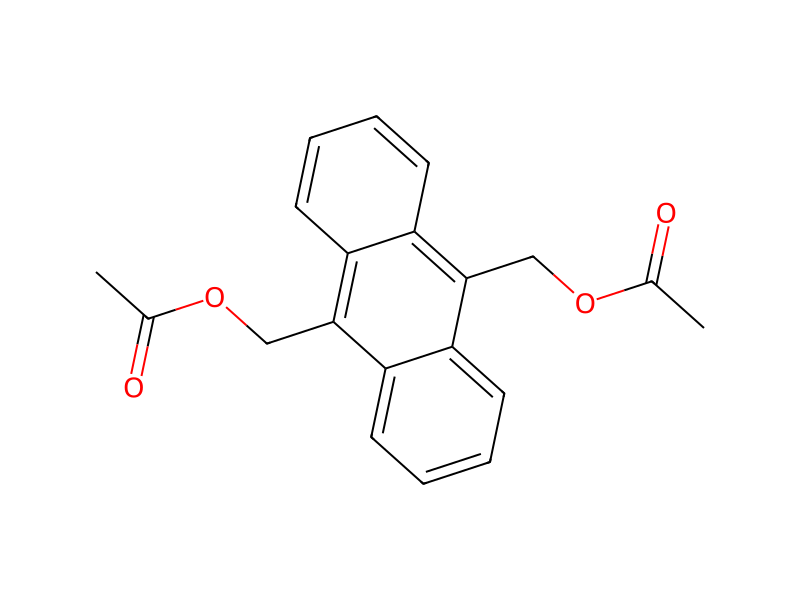
Acetic acid 10-acetoxymethyl-anthracen-9-ylmethyl ester → HCID 22750661, compound
Reaction equation

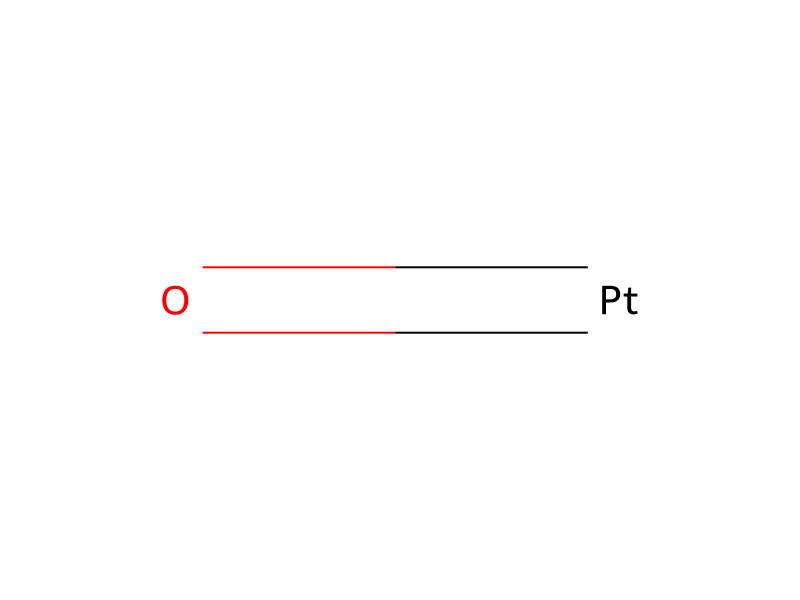
[CH3:1][C:2]1[C:12]2[CH2:11][CH2:10][C:9]3[CH:13]=[CH:14][CH:15]=[CH:16][C:8]=3[C:7](=[CH:17][CH2:18][CH2:19][N:20]([CH3:22])[CH3:21])[C:6]=2[CH:5]=[CH:4][CH:3]=1.CC(OCC1C2C(=CC=CC=2)C(COC(C)=O)=C2C=1C=CC=C2)=O>[Pt]=O>[CH3:1][C:2]1[C:12]2[CH2:11][CH2:10][C:9]3[CH:13]=[CH:14][CH:15]=[CH:16][C:8]=3[CH:7]([CH2:17][CH2:18][CH2:19][N:20]([CH3:22])[CH3:21])[C:6]=2[CH:5]=[CH:4][CH:3]=1Participants
4
Reactant 2

Product 1

Reagents, catalysts & solvents 1
Procedure
39.5 g. of 1-methyl-10,11-dihydro-5-(3-dimethylaminopropylidene)-5H-dibenzo[a,d]cycloheptene are dissolved in 400 ml. of glacial acetic and hydrogenated at room temperature and under normal pressure in the presence of 3 g. of platinum oxide. When the uptake of hydrogen ceases, the catalyst is removed by filtration. The filtrate is evaporated, and the residue distilled whereby 1-methyl-10,11-dihydro-5-(3-dimethylaminopropyl)-5H-dibenzo[a,d]cycloheptene goes over at 140° C. under 0.01 mmHg. The corresponding hydrochloride salt has a melting point of 181°-183° C. after recrystallization from ethanol-ether.
Workup
- customhydrogenated at room temperature
- customWhen the uptake of hydrogen ceases, the catalyst is removed by filtration
- customThe filtrate is evaporated
- distillationthe residue distilled whereby 1-methyl-10,11-dihydro-5-(3-dimethylaminopropyl)-5H-dibenzo[a,d]cycloheptene
- customgoes over at 140° C. under 0.01 mmHg
- customafter recrystallization from ethanol-ether
Sources & evidence
- ORD record
- ord-9a037fab42be42e493168e551d704304
- Source dataset
- uspto-grants-1976_04
- Patent number
- US03952017
Reaction notes
Loading…