Pyridine → HCID 4134902, compound
Reaction equation

[C:1]([C:3]1[CH:8]=[CH:7][C:6]([C:9]2[CH:14]=[CH:13][C:12]([OH:15])=[CH:11][CH:10]=2)=[CH:5][CH:4]=1)#[N:2].N1C=CC=CC=1.[C:22](Cl)(=[O:28])[CH2:23][CH2:24][CH2:25][CH2:26][CH3:27]>C1C=CC=CC=1>[C:22]([O:15][C:12]1[CH:13]=[CH:14][C:9]([C:6]2[CH:5]=[CH:4][C:3]([C:1]#[N:2])=[CH:8][CH:7]=2)=[CH:10][CH:11]=1)(=[O:28])[CH2:23][CH2:24][CH2:25][CH2:26][CH3:27]Participants
5
Reactant 3

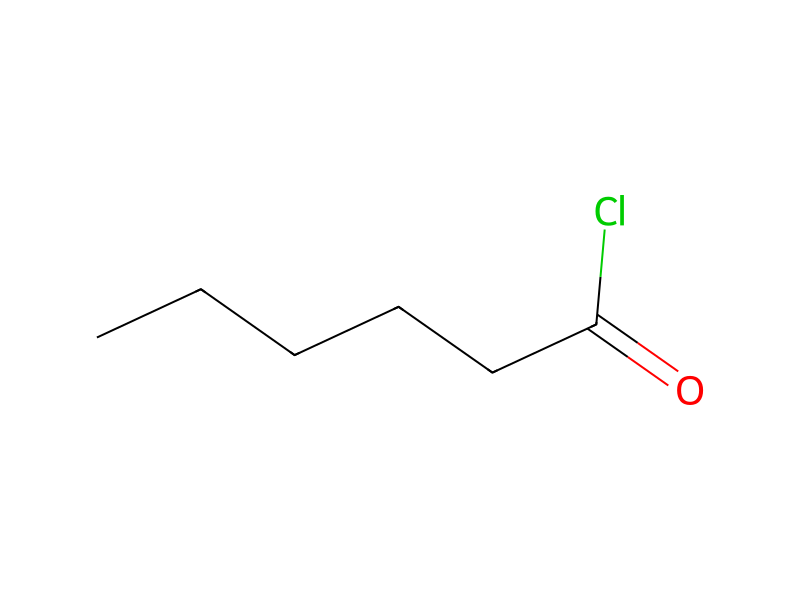

Product 1

Reagents, catalysts & solvents 1

Procedure
0.390 G. of 4'-cyano-4-hydroxy-biphenyl are dissolved in 4.0 ml. of absolute pyridine and reacted with 0.323 g. of caproic acid chloride as in Example 1. The 0.613 g. of yellowish crystals obtained according to the procedure described in Example 1 are dissolved in benzene and chromatographed on 40 g. of silica gel. Benzene elutes 0.555 g. of colorless crystals which are recrystallized from acetone-hexane up to constant melting point and clearing point. The pure 4'-cyano-4-biphenylyl hexanoate obtained melts at 56.1° and has a clearing point of 70.7°. UV (EtOH): ε273 = 26,400.
Workup
- customof yellowish crystals obtained
- customchromatographed on 40 g
- customof colorless crystals which are recrystallized from acetone-hexane up to constant melting point and clearing point
Sources & evidence
- ORD record
- ord-9d6c2eb3a35d4b9d997512288d39fb7e
- Source dataset
- uspto-grants-1976_04
- Patent number
- US03952046
Reaction notes
Loading…