2',4'-Dihydroxyacetophenone → 4-[3-(4-Acetyl-3-hydroxyphenoxy)-2-hydroxypropoxy]benzonitrile
Reaction equation

[CH3:1][C:2]([C:4]1[CH:5]=[CH:6][C:7]([OH:11])=[CH:8][C:9]=1[OH:10])=[O:3].C(C1C=CC([CH:20]([O:24]C(C2C=CC(C#N)=CC=2)C2OC2)[CH:21]2[O:23][CH2:22]2)=CC=1)#N.[OH-].[CH2:38]([N+:45](C)(C)C)[C:39]1[CH:44]=[CH:43][CH:42]=[CH:41][CH:40]=1>C(OCCO)C>[C:2]([C:4]1[CH:5]=[CH:6][C:7]([O:11][CH2:22][CH:21]([OH:23])[CH2:20][O:24][C:42]2[CH:43]=[CH:44][C:39]([C:38]#[N:45])=[CH:40][CH:41]=2)=[CH:8][C:9]=1[OH:10])(=[O:3])[CH3:1]Participants
5



Procedure
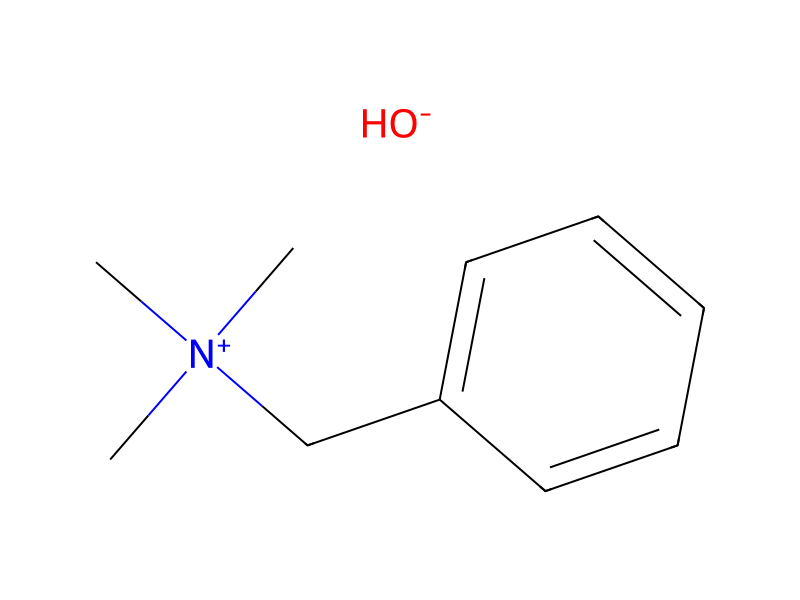
A solution of 2,4-dihydroxyacetophenone (15.2 g), p-cyano-phenylglycidyl ether (17.5 g) and benzyltrimethyl-ammonium hydroxide (10 drops of a 40% solution) in 2-ethoxyethanol (75 ml) was heated under relux for 48 hours. The solvent was then removed under reduced pressure to give a beige solid. This was triturated with a little ether and filtered to give a pale beige powder, (28.6 g). Recrystallization from ethanol yielded 1-(4-acetyl-3-hydroxy-phenoxy)- 2-hydroxy-3-(p-cyanophenoxy) propane as white needles, m.p. 161.5°-163° C.
Workup
- customThe solvent was then removed under reduced pressure
- customto give a beige solid
- customThis was triturated with a little ether
- filtrationfiltered
- customto give a pale beige powder, (28.6 g)
- customRecrystallization from ethanol
Sources & evidence
- ORD record
- ord-6628b9a8d0e84bd39c69eaf13fbfa72b
- Source dataset
- uspto-grants-1976_04
- Patent number
- US03953604
Reaction notes
Loading…