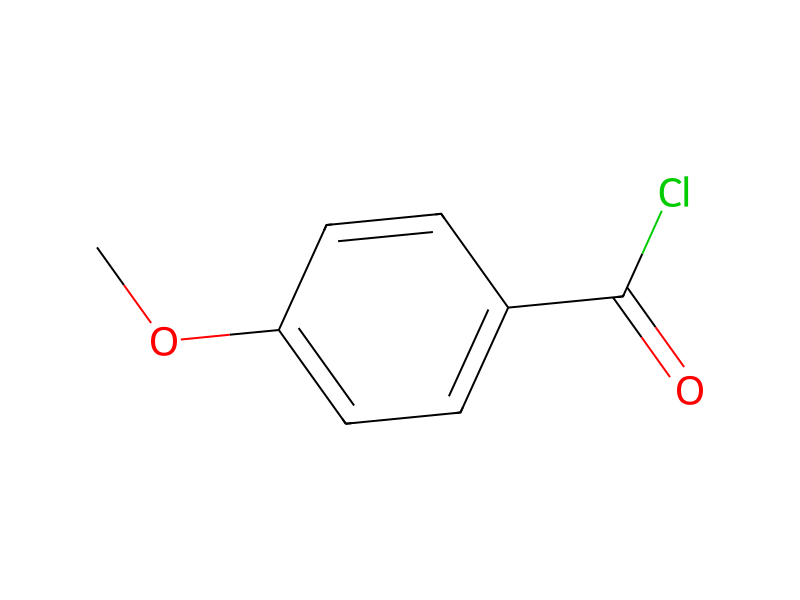
p-Anisoyl chloride → HCID 178491591, compound
Reaction equation

Br.[NH2:2][C:3]1[NH:4][C:5]2[CH:11]=[C:10]3[NH:12][C:13](=[O:17])[C:14]([CH3:16])([CH3:15])[C:9]3=[CH:8][C:6]=2[N:7]=1.[C:18](Cl)(=[O:27])[C:19]1[CH:24]=[CH:23][C:22]([O:25][CH3:26])=[CH:21][CH:20]=1>N1C=CC=CC=1>[CH3:16][C:14]1([CH3:15])[C:9]2[C:10](=[CH:11][C:5]3[NH:4][C:3]([NH:2][C:18](=[O:27])[C:19]4[CH:24]=[CH:23][C:22]([O:25][CH3:26])=[CH:21][CH:20]=4)=[N:7][C:6]=3[CH:8]=2)[NH:12][C:13]1=[O:17]Participants
4
Reactant 2

Product 1

Reagents, catalysts & solvents 1

Procedure
3 g. (10.1 mmole) 2-Amino-7,7-dimethyl-6,7-dihydro-3H,5H-pyrrolo[2,3-f]benzimidazol-6-one hydrobromide are stirred with 2.5 g. p-anisoyl chloride in 50 ml. pyridine for 4 hours at 50° C. The pyridine is subsequently distilled off, the residue is worked up with water, decanted, worked up with ligroin and the residue recrystallised twice from ethanol to give 1.4 g. (40% of theory) of the title compound; m.p. >300° C.
Workup
- distillationThe pyridine is subsequently distilled off
- customdecanted
- customthe residue recrystallised twice from ethanol
- customto give 1.4 g
Sources & evidence
- ORD record
- ord-203f035369c74f32a1edde97f8d4800f
- Source dataset
- uspto-grants-1989_09
- Patent number
- US04863945
Reaction notes
Loading…