Sodium Hydroxide → HCID 53890557, compound
Reaction equation

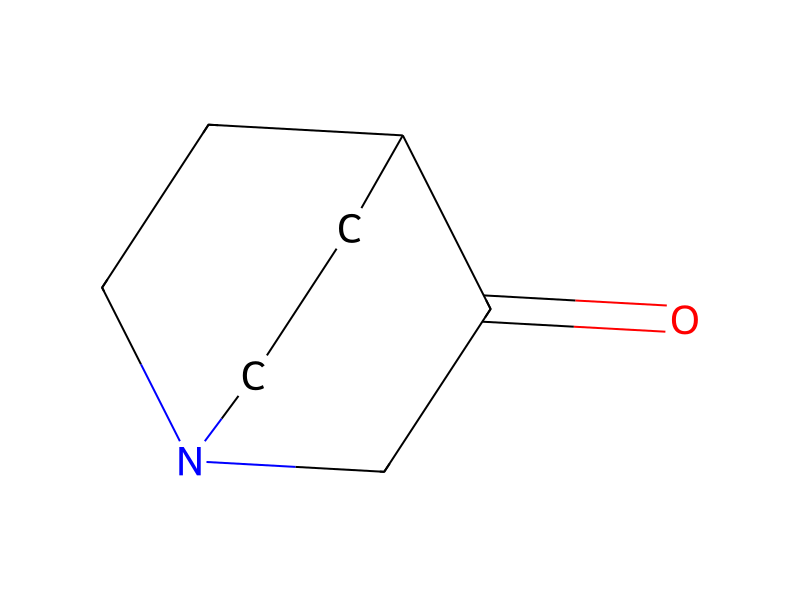
[N:1]12[CH2:8][CH2:7][CH:4]([CH2:5][CH2:6]1)[C:3](=[O:9])[CH2:2]2.[OH-].[Na+].[CH2:12]([CH:14]([CH2:25][CH2:26][CH2:27][CH3:28])[CH2:15][O:16][C:17]1[CH:24]=[CH:23][C:20]([CH:21]=O)=[CH:19][CH:18]=1)[CH3:13]>O.C(O)C>[CH2:12]([CH:14]([CH2:25][CH2:26][CH2:27][CH3:28])[CH2:15][O:16][C:17]1[CH:18]=[CH:19][C:20]([CH:21]=[C:2]2[C:3](=[O:9])[CH:4]3[CH2:7][CH2:8][N:1]2[CH2:6][CH2:5]3)=[CH:23][CH:24]=1)[CH3:13]Participants
6
Reactant 3


Product 1

Reagents, catalysts & solvents 2


Procedure
A solution of 16.0 g of 3-quinuclidinone (hydrochloride) in 100 ml of water is treated with 100 ml of a 32% sodium hydroxide solution. 36.0 g of 4-(2-ethylhexyloxy)benzaldehyde [can be prepared from p-hydroxybenzaldehyde by reaction with 1-chloro-2-ethylhexane], dissolved in 250 ml of ethanol, is then added with stirring and the mixture is heated under reflux for 3 hours. After the reaction is complete, it is worked up in the customary manner. 2-[4-(2-ethylhexyloxy)benzylidene]quinuclidin-3-one is obtained in the form of a pale yellow solid; m.p. 37°, λmax =331 nm, E=0.8.
Workup
- additionis then added
- temperaturethe mixture is heated
- temperatureunder reflux for 3 hours
Sources & evidence
- ORD record
- ord-f69e35a07767403eab7853c21d10484b
- Source dataset
- uspto-grants-1995_03
- Patent number
- US05399563
Reaction notes
Loading…