Quinoline → 1,6-Dicarbomethoxy-cis-3-hexene
Reaction equation

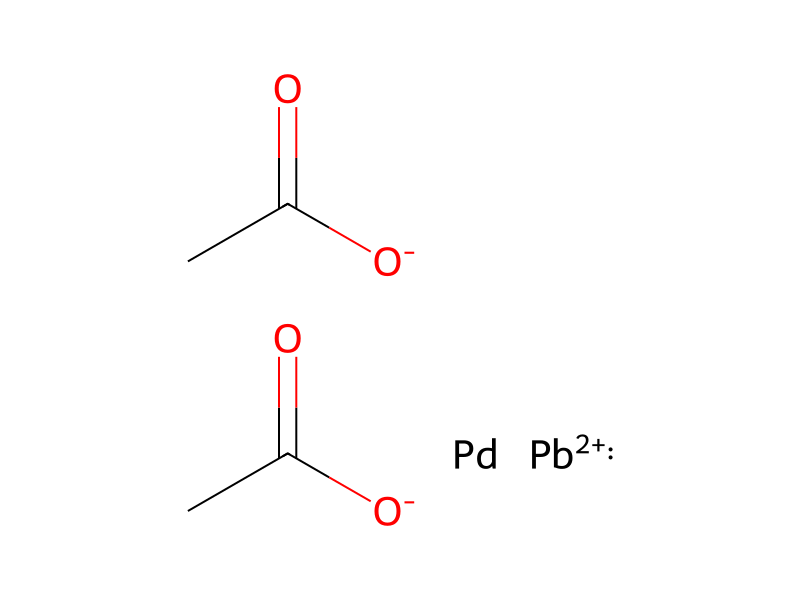
[C:1]([CH2:5][CH2:6][C:7]#[C:8][CH2:9][CH2:10][C:11]([O:13][CH3:14])=[O:12])([O:3][CH3:4])=[O:2].N1C2C(=CC=CC=2)C=CC=1>[Pd].CC([O-])=O.CC([O-])=O.[Pb+2].CO>[C:11]([CH2:10][CH2:9]/[CH:8]=[CH:7]\[CH2:6][CH2:5][C:1]([O:3][CH3:4])=[O:2])([O:13][CH3:14])=[O:12]Participants
5
Reactant 2


Product 1

Reagents, catalysts & solvents 2

Procedure
A mixture of 1,6-dicarbomethoxy-3-hexyne [II-1] (5 g), a Lindlar catalyst (5% Pd-CaCO3 -PbO) (50 mg), quinoline (25 mg) and methanol (15 ml) is charged in an atmospheric hydrogenation apparatus and subjected to reduction at room temperature under atmospheric pressure. After completion of the reaction, the catalyst is removed by filtration and the filtrate is concentrated to give 1,6-dicarbomethoxy-cis-3-hexene [II-2] (4.70 g, yield; 93.0%), b.p. 92°-95° C./0.3 mmHg.
Workup
- customsubjected to reduction at room temperature under atmospheric pressure
- customAfter completion of the reaction
- customthe catalyst is removed by filtration
- concentrationthe filtrate is concentrated
Sources & evidence
- ORD record
- ord-cd04e879614c41f980684f008036c460
- Source dataset
- uspto-grants-1993_03
- Patent number
- US05191109
Reaction notes
Loading…