Trimethylamine → 2-({[(Prop-2-yn-1-yl)oxy]carbonyl}oxy)ethyl 2-methylprop-2-enoate
Reaction equation

[C:1]([O:6][CH2:7][CH2:8][OH:9])(=[O:5])[C:2]([CH3:4])=[CH2:3].CN(C)C.Cl[C:15]([O:17][CH2:18][C:19]#[CH:20])=[O:16].C(Cl)Cl.O>C(Cl)Cl>[C:1]([O:6][CH2:7][CH2:8][O:9][C:15]([O:17][CH2:18][C:19]#[CH:20])=[O:16])(=[O:5])[C:2]([CH3:4])=[CH2:3]Participants
Reactant 4


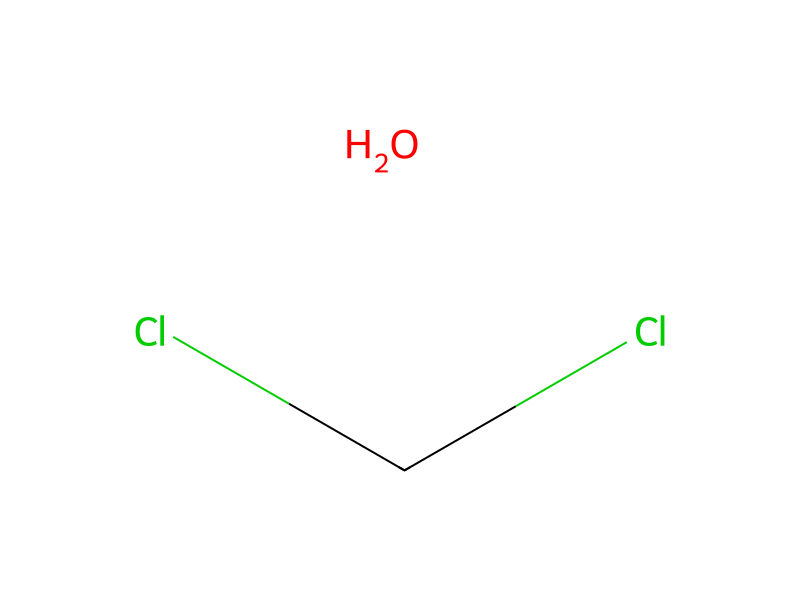
Product 1

Reagents, catalysts & solvents 1

Procedure
A flask equipped with a stirrer, thermometer, nitrogen gas tube and reflux condenser was charged with 13.0 g of 2-hydroxyethyl methacrylate and 11.5 g of trimethylamine in 50.0 g of methylene chloride. To the flask was added 13.0 g of propargyl chloroformate dropwise over one hour. The mixture was allowed to react for 6 hours at 30° C. After the reaction, the mixture was treated with methylene chloride-water mixture. The organic phase was separated and dried over magnesium sulfate. After filtering, the filtrate was evaporated in a rotary evaporator. The resulting residue was applied on a 200 mesh silica gel column and developed with ethyl acetate-hexane mixture. The title compound was obtained as colorless liquid. Yield was 73.6% of theory.
Workup
- customA flask equipped with a stirrer
- temperaturethermometer, nitrogen gas tube and reflux condenser
- customto react for 6 hours at 30° C
- customAfter the reaction
- customThe organic phase was separated
- dry with materialdried over magnesium sulfate
- filtrationAfter filtering
- customthe filtrate was evaporated in a rotary evaporator
Sources & evidence
- ORD record
- ord-f2cf3f7058e24c9d8102443bde2ca02d
- Source dataset
- uspto-grants-1993_03
- Patent number
- US05194655
Reaction notes
Loading…