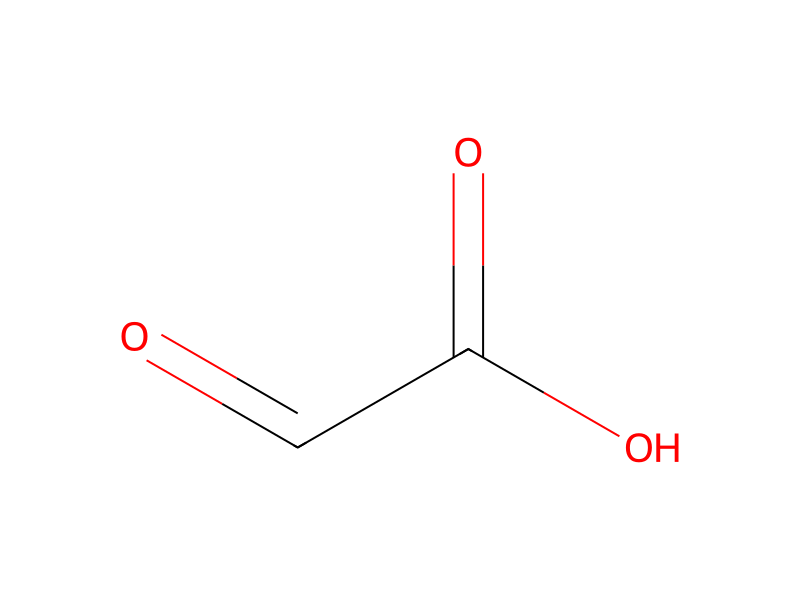
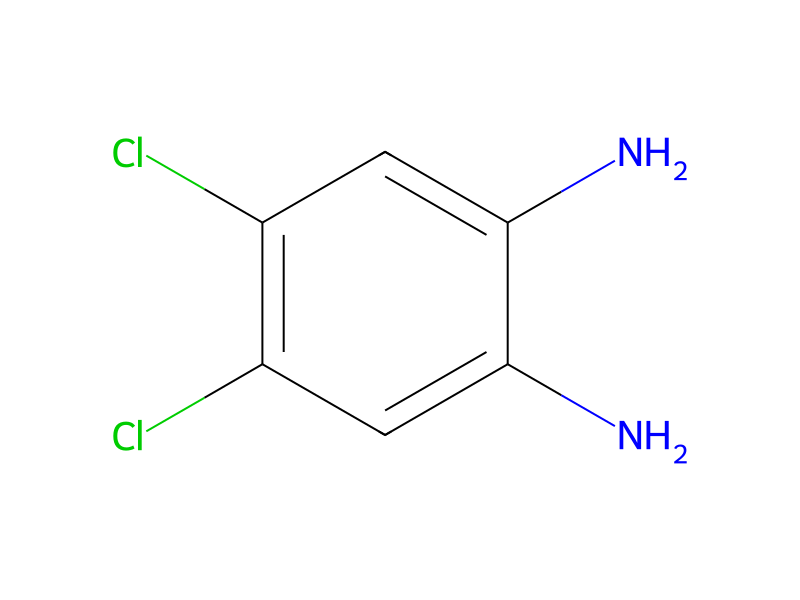
Glyoxylic Acid → 6,7-Dichloroquinoxalin-2(1H)-one
Reaction equation

[Cl:1][C:2]1[C:7]([Cl:8])=[CH:6][C:5]([NH2:9])=[C:4]([NH2:10])[CH:3]=1.[C:11](O)(=O)[CH:12]=[O:13]>CCO>[Cl:1][C:2]1[CH:3]=[C:4]2[C:5](=[CH:6][C:7]=1[Cl:8])[NH:9][C:12](=[O:13])[CH:11]=[N:10]2Participants
4
Reactant 2
Product 1

Reagents, catalysts & solvents 1

Procedure
4,5-Dichloro-1,2-phenylenediamine (25 g, 141.2 mmol) was suspended in 780 ml EtOH, and 13 g (142.0 mmol) of glyoxylic acid (HO2CCOH/H2O) was added. The mixture was heated at reflux for 3 hours, and then cooled and filtered, yielding 27.45 g of 6,7-dichloroquinoxalin-2-one as a solid. The product (25 g, 116.3 mmol) and 230 ml (911.7 mmol) of phosphorous oxychloride (POCl3) were stirred at reflux (100° C.) for 3 hours. The mixture was cooled and ice/H2O added. The resulting brown/grey solid was filtered, and dried in an oven, yielding approximately 25 g of 2,6,7-trichloroquinoxaline.
Workup
- temperatureThe mixture was heated
- temperatureat reflux for 3 hours
- temperaturecooled
- filtrationfiltered
Sources & evidence
- ORD record
- ord-0bfab91632c949c2b6864b272605ef2e
- Source dataset
- uspto-grants-1993_03
- Patent number
- US05196421
Reaction notes
Loading…