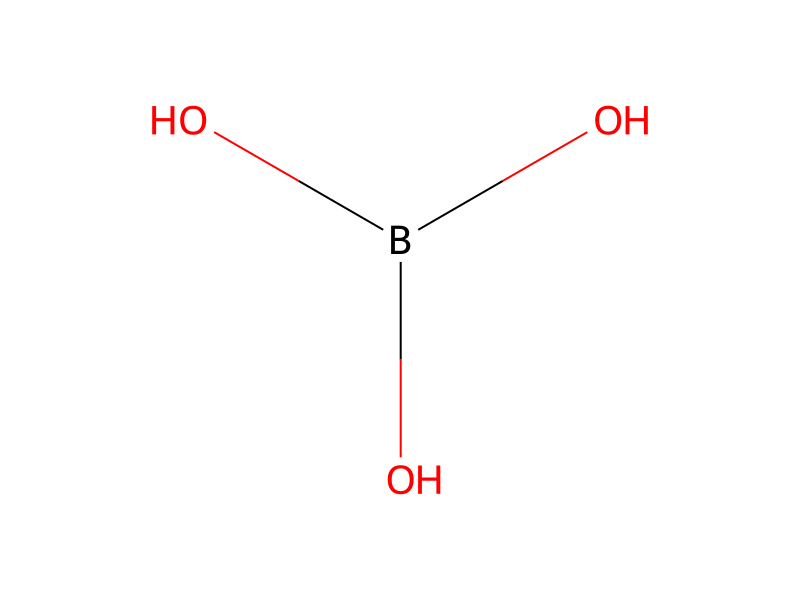
Boric Acid → 5-(1-Hydroxyethyl)-2-[(phenylmethyl)oxy]-N-3-pyridinylbenzamide
Reaction equation

[BH4-].[Na+].B(O)(O)O.[C:7]([C:10]1[CH:11]=[CH:12][C:13]([O:25][CH2:26][C:27]2[CH:32]=[CH:31][CH:30]=[CH:29][CH:28]=2)=[C:14]([CH:24]=1)[C:15]([NH:17][C:18]1[CH:19]=[N:20][CH:21]=[CH:22][CH:23]=1)=[O:16])(=[O:9])[CH3:8]>C(O)C>[OH:9][CH:7]([C:10]1[CH:11]=[CH:12][C:13]([O:25][CH2:26][C:27]2[CH:28]=[CH:29][CH:30]=[CH:31][CH:32]=2)=[C:14]([CH:24]=1)[C:15]([NH:17][C:18]1[CH:19]=[N:20][CH:21]=[CH:22][CH:23]=1)=[O:16])[CH3:8]Participants
5




Procedure
Sodium borohydride (32.8 mg, 0.87 mmol) and boric acid (53.6 mg, 0.87 mmol) were added to a suspension of 5-acetyl-2-[(phenylmethyl)oxy]-N-3-pyridinylbenzamide (may be prepared as described in Example 72; 100 mg, 0.29 mmol) in ethanol (5 ml). The mixture was stirred for one hour and then it was quenched using saturated NaHCO3 solution (5 ml). The mixture was extracted with dichloromethane (3×5 ml). The organic layers were dried (MgSO4) and the solvent removed in vacuo. The residue was purified by MDAP to yield the title compound as a golden solid. 62 mg.
Workup
- customit was quenched
- extractionThe mixture was extracted with dichloromethane (3×5 ml)
- dry with materialThe organic layers were dried (MgSO4)
- customthe solvent removed in vacuo
- customThe residue was purified by MDAP
Sources & evidence
- ORD record
- ord-5aa16436693c4693b7d93e2f7a745aea
- Source dataset
- uspto-grants-2014_07
- Patent number
- US08778939B2
Reaction notes
Loading…