Sodium Carbonate → HCID 86677062, compound
Reaction equation

[Cl:1][C:2]1[C:7](I)=[CH:6][N:5]=[C:4]([NH2:9])[N:3]=1.[N:10]1[CH:15]=[CH:14][CH:13]=[C:12](B(O)O)[CH:11]=1.B(O)O.C([O-])([O-])=O.[Na+].[Na+]>O1CCOCC1.C1C=CC([P]([Pd]([P](C2C=CC=CC=2)(C2C=CC=CC=2)C2C=CC=CC=2)([P](C2C=CC=CC=2)(C2C=CC=CC=2)C2C=CC=CC=2)[P](C2C=CC=CC=2)(C2C=CC=CC=2)C2C=CC=CC=2)(C2C=CC=CC=2)C2C=CC=CC=2)=CC=1>[Cl:1][C:2]1[C:7]([C:12]2[CH:11]=[N:10][CH:15]=[CH:14][CH:13]=2)=[CH:6][N:5]=[C:4]([NH2:9])[N:3]=1Participants
7

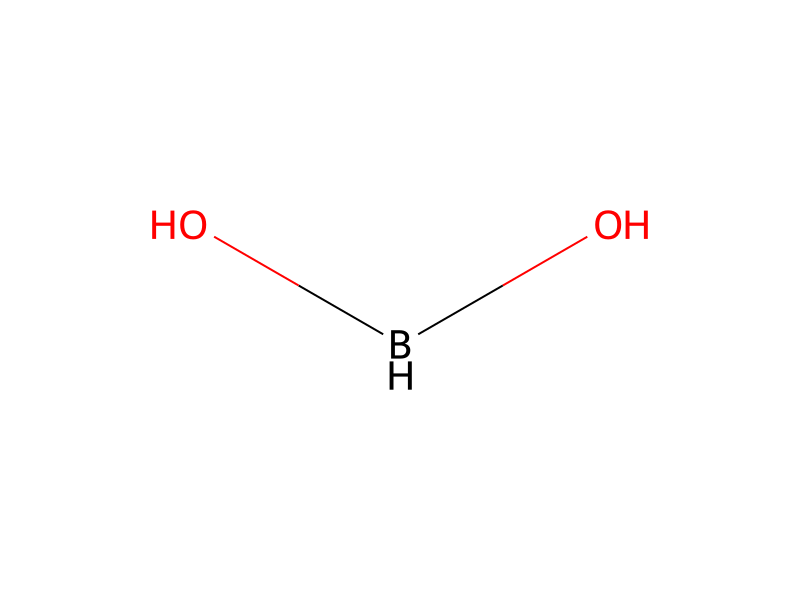




Conditions
- Temperature
- 90 °C
Procedure
4-Chloro-5-(pyridin-3-yl)pyrimidin-2-amine 131 was prepared from the coupling of 4-chloro-5-iodopyrimidin-2-amine with pyridin-3-ylboronic acid as follows: the amine (150 mg, 0.587 mmol), and the boronic acid (144 mg, 1.174 mmol) were suspended in dioxane (2.5 mL) and Na2CO3 (783 μl, 1.174 mmol). The mixture was bubbled with Ar for 5 min then charged with Pd(Ph3P)4 (136 mg, 0.117 mmol). The mixture was stirred at 90° C. for 2 h, then cooled to room temperature. The mixture was partitioned between EtOAc and water. The organic layer was dried, filtered, and concentrated to give a residue which was purified by silica gel column chromatography to give 4-chloro-5-(pyridin-3-yl)pyrimidin-2-amine 131.
Workup
- customThe mixture was bubbled with Ar for 5 min
- temperaturecooled to room temperature
- customThe mixture was partitioned between EtOAc and water
- customThe organic layer was dried
- filtrationfiltered
- concentrationconcentrated
- customto give a residue which
- customwas purified by silica gel column chromatography
Sources & evidence
- ORD record
- ord-bf88f98f51a84a3295e8f7830d30bb11
- Source dataset
- uspto-grants-2014_07
- Patent number
- US08785470B2
Reaction notes
Loading…