Isoprene → 2-Methylbuta-1,3-diene;styrene
Reaction equation

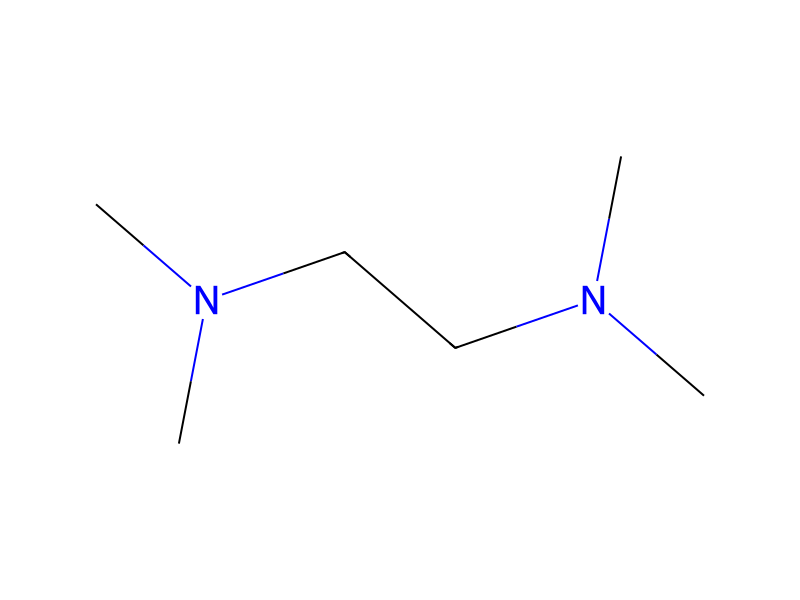
CN(CCN(C)C)C.[CH2:9]=[CH:10][C:11]1[CH:16]=[CH:15][CH:14]=[CH:13][CH:12]=1.C([Li])CCC.C=CC(=C)C>C1CCCCC1>[CH2:9]=[CH:10][C:11](=[CH2:12])[CH3:16].[CH2:9]=[CH:10][C:11]1[CH:16]=[CH:15][CH:14]=[CH:13][CH:12]=1Participants
Reactant 4



Product 1

Reagents, catalysts & solvents 1

Conditions
- Temperature
- 40 °C
Procedure
In a pressure resistant reactor, 23.3 kg of cyclohexane, 3.75 millimoles of TMEDA, and 1.80 kg of styrene were added, and while the mixture was stirred at 40° C., 250.0 millimoles of n-butyllithium was added thereto. While the temperature was elevated to 50° C., polymerization was carried out for one hour. The polymerization conversion ratio for styrene was 100%. Subsequently, while the temperature was controlled to be maintained at 50° C. to 60° C., 8.20 kg of isoprene was continuously added to the reactor for one hour. After completion of the addition of isoprene, polymerization was carried out for another one hour, and thus a styrene-isoprene diblock copolymer was formed, which would serve as the polymer C (block copolymer C1). Subsequently, 500.0 millimoles of methanol was added to the reaction liquid as a polymerization terminator. The resulting mixture was thoroughly mixed, and thereby the reaction was terminated. A portion of the reaction liquid thus obtained was taken out, and was subjected to the same analyses as in Reference Example 1. These values are presented in Table 2. The subsequent operation was carried out in the same manner as in Reference Example 1, and a composition of Reference Example 9 (styrene-isoprene diblock copolymer) was collected.
Workup
- customwas elevated to 50° C.
- custompolymerization
- temperatureto be maintained at 50° C. to 60° C.
- waitwas carried out for another one hour
Sources & evidence
- ORD record
- ord-1d421ecf7cb7434eb0fd52f812304aab
- Source dataset
- uspto-grants-2014_07
- Patent number
- US08791196B2
Reaction notes
Loading…