Ethylene Glycol → 2-Hydroxyethyl n,n,n',n'-tetrakis(2-chloroethyl)phosphorodiamidate
Reaction equation

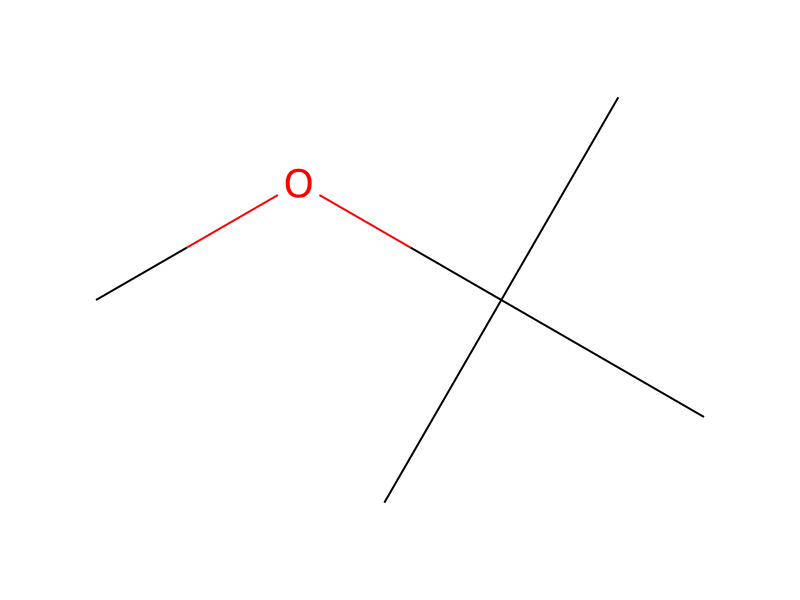
[Cl:1][CH2:2][CH2:3][N:4]([CH2:15][CH2:16][Cl:17])[P:5](Cl)([N:7]([CH2:11][CH2:12][Cl:13])[CH2:8][CH2:9][Cl:10])=[O:6].[CH2:18]([OH:21])[CH2:19][OH:20].CC(C)([O-])C.[K+].Cl>O.C(OC)(C)(C)C.O1CCCC1>[OH:20][CH2:19][CH2:18][O:21][P:5]([N:4]([CH2:3][CH2:2][Cl:1])[CH2:15][CH2:16][Cl:17])([N:7]([CH2:8][CH2:9][Cl:10])[CH2:11][CH2:12][Cl:13])=[O:6]Participants
Reactant 4


Product 1

Reagents, catalysts & solvents 3
Conditions
- Temperature
- 0 °C
Procedure
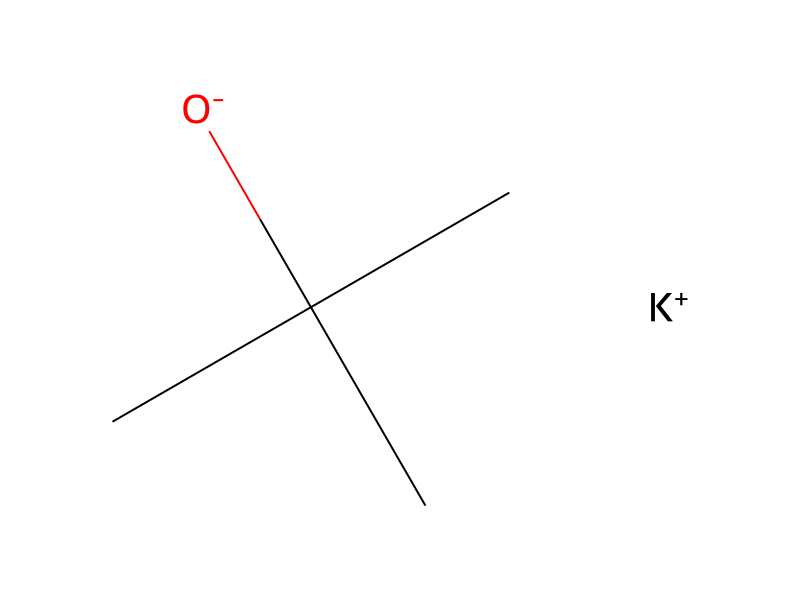
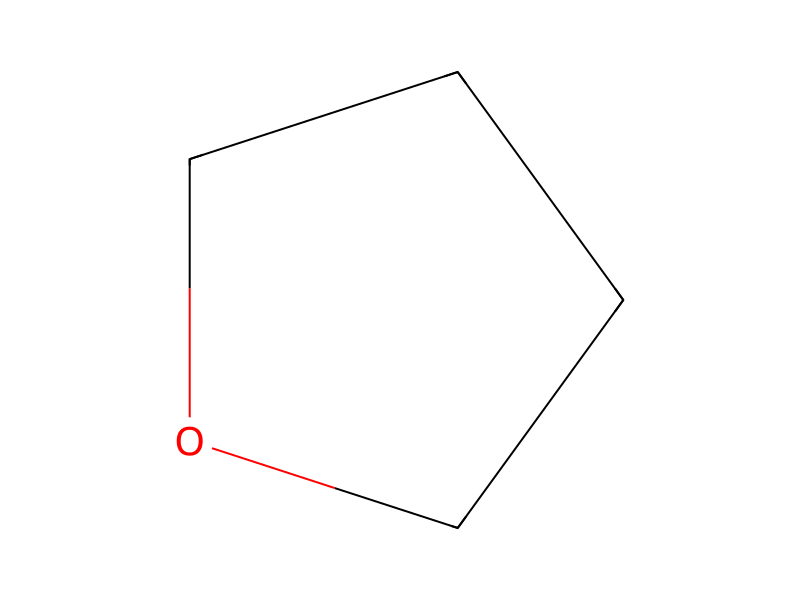
A 12-L, three-neck, round-bottom flask was equipped with an overhead mechanical stirrer, a thermometer and a nitrogen inlet/outlet bubbler. The flask was charged with N,N,N′,N′-tetrakis(2-chloroethyl)phosphorodiamidic chloride (979 g, 2.68 moles), 2, ethylene glycol (1.5 L, 26.8 moles), 4 and tetrahydrofuran (3 L). The stirrer was set to agitate at a moderate rate (to provide a clear red solution) and the mixture was cooled to 0° C. using an ice/water bath. To this cooled solution was added potassium tert-butoxide (362 g, 3.22 moles) over 20 minutes. The reaction mixture was then slowly warmed to room temperature and stirred for a total of 19 hours. A solution of hydrogen chloride in water (8 L, 1M) was introduced into the flask over 10 minutes. The organic fraction was collected and the aqueous fraction was extracted with ethyl acetate (2×4 L). The combined organic fractions were washed with saturated aqueous sodium chloride solution (1×4 L) and the solvents were removed under reduced pressure (30 mm Hg vacuum, final bath temperature at 50° C.) on a rotary evaporator to provide a dark reddish brown oil. This crude organic product was then dissolved with warm (40° C.) methyl tert-butyl ether (2 L) and allowed to cool to room temperature, stirring for a total of 14 hours. The resulting slurry was stirred for 30 minutes at 0° C. after which the precipitate was collected by vacuum filtration and washed with cold methyl tert-butyl ether (1 L). The combined filtrates were concentrated under reduced pressure (30 mmHg vacuum, final bath temperature at 50° C.) on a rotary evaporator to a volume of 500 mL and stirred for 30 minutes at 0° C. The resulting precipitate was collected by vacuum filtration and washed with cold methyl tert-butyl ether (200 mL). Two crops of solid product were then combined and dried overnight (30 mm Hg, 40° C.) to produce 2-hydroxyethyl-N,N,N′,N′-tetrakis(2-chloroethyl)phosphorodiamidate, 3, as a tan powder (526 gm, 50% yield). TLC analysis showed one spot (Rf0.62; methanol:chloroform 1:9). Melting point: 76-78° C.; IR (KBr) 3372, 2957, 1459, 1344, 1206, 1098, 1053, 929 cm−1; MS (CI, methane) m/z 391(MH+), 353, 339, 248, 106. A thermal analysis (DSC) showed two exothermic decomposition ranges of 164-179 and 222-231 C.
Workup
- customto provide a clear red solution) and the mixture
- temperatureThe reaction mixture was then slowly warmed to room temperature
- stirringstirred for a total of 19 hours
- customThe organic fraction was collected
- extractionthe aqueous fraction was extracted with ethyl acetate (2×4 L)
- washThe combined organic fractions were washed with saturated aqueous sodium chloride solution (1×4 L)
- customthe solvents were removed under reduced pressure (30 mm Hg vacuum
- customfinal bath temperature at 50° C.) on a rotary evaporator
- customto provide a dark reddish brown oil
- dissolutionThis crude organic product was then dissolved
- temperatureto cool to room temperature
- stirringstirring for a total of 14 hours
- stirringThe resulting slurry was stirred for 30 minutes at 0° C. after which the precipitate
- filtrationwas collected by vacuum filtration
- washwashed with cold methyl tert-butyl ether (1 L)
- concentrationThe combined filtrates were concentrated under reduced pressure (30 mmHg vacuum
- customfinal bath temperature at 50° C.) on a rotary evaporator to a volume of 500 mL
- stirringstirred for 30 minutes at 0° C
- filtrationThe resulting precipitate was collected by vacuum filtration
- washwashed with cold methyl tert-butyl ether (200 mL)
- customdried overnight (30 mm Hg, 40° C.)
Sources & evidence
- ORD record
- ord-7c896305866b493383d71a876f72392c
- Source dataset
- uspto-grants-2003_01
- Patent number
- US06506739B1
Reaction notes
Loading…