Mannitol → Tacrine
Reaction equation

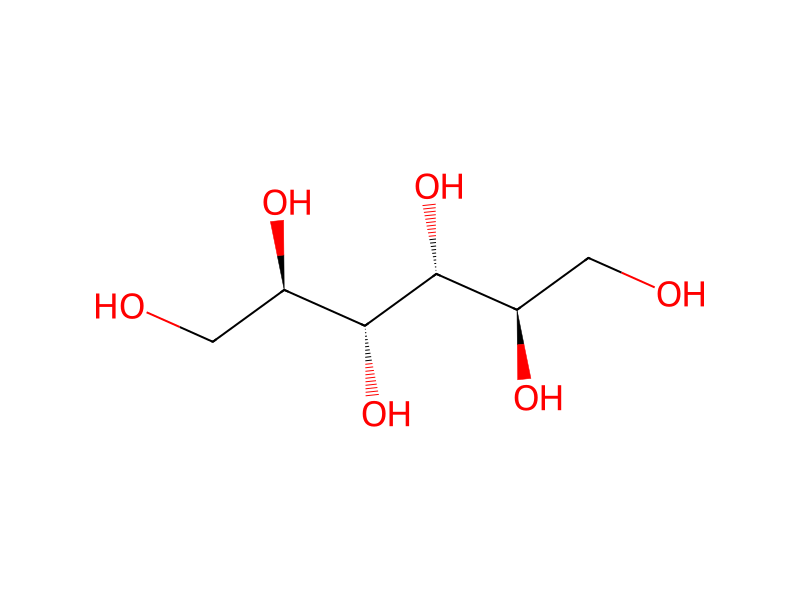
[CH:1]1[CH:2]=[CH:3][C:4]2[C:5](=[C:7]([NH2:15])[C:8]3[CH2:14][CH2:13][CH2:12][CH2:11][C:9]=3[N:10]=2)[CH:6]=1.Cl.[CH2:17]([OH:28])[C@H:18]([C@H:20]([C@@H:22]([C@@H:24]([CH2:26][OH:27])[OH:25])[OH:23])[OH:21])[OH:19]>>[CH:1]1[CH:2]=[CH:3][C:4]2[C:5](=[C:7]([NH2:15])[C:8]3[CH2:14][CH2:13][CH2:12][CH2:11][C:9]=3[N:10]=2)[CH:6]=1.[CH2:26]([OH:27])[C@H:24]([C@H:22]([C@@H:20]([C@@H:18]([CH2:17][OH:28])[OH:19])[OH:21])[OH:23])[OH:25]Participants
4


Procedure
Next, 47,600 g of tacrine hydrochloride and 79,800 g of mannitol are sized using a 20 mesh screen. Then, the screened materials are added to a granulator bowl. The bowl is attached to the granulator and the granulation process initiated. Next, the dry powders are air suspended and mixed for 3 minutes. Then, the binder solution is sprayed onto powder to produce granules of tacrine and mannitol granulated with the binder ingredients. The processing conditions are as follows: a total solution spray rate of 900 g/minute, an inlet temperature of 65° C., and a process air flow of 1000 to 2500 m3 /hr.
Workup
- additionThen, the screened materials are added to a granulator bowl
- additionmixed for 3 minutes
Sources & evidence
- ORD record
- ord-2413407966514fb08a98772907c77f5c
- Source dataset
- uspto-grants-2000_03
- Patent number
- US06036973
Reaction notes
Loading…