Sodium Carbonate → 4-(4-Bromophenyl)pyridine
Reaction equation

C(=O)([O-])[O-].[Na+].[Na+].Br[C:8]1[CH:13]=[CH:12][N:11]=[CH:10][CH:9]=1.[Br:14][C:15]1[CH:20]=[CH:19][C:18](B(O)O)=[CH:17][CH:16]=1>C1C=CC=CC=1.C(O)C.C1(P(C2C=CC=CC=2)C2C=CC=CC=2)C=CC=CC=1.C1(P(C2C=CC=CC=2)C2C=CC=CC=2)C=CC=CC=1.C1(P(C2C=CC=CC=2)C2C=CC=CC=2)C=CC=CC=1.C1(P(C2C=CC=CC=2)C2C=CC=CC=2)C=CC=CC=1.[Pd]>[Br:14][C:15]1[CH:20]=[CH:19][C:18]([C:8]2[CH:13]=[CH:12][N:11]=[CH:10][CH:9]=2)=[CH:17][CH:16]=1Participants

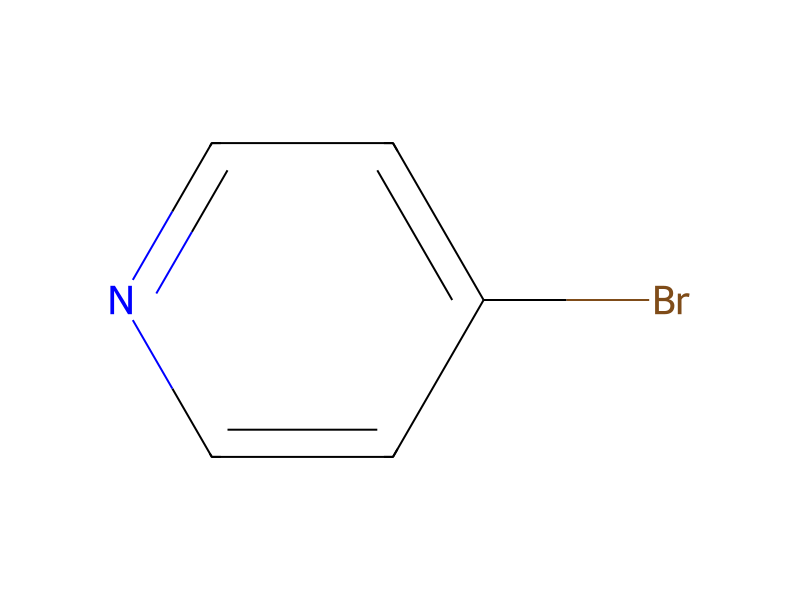
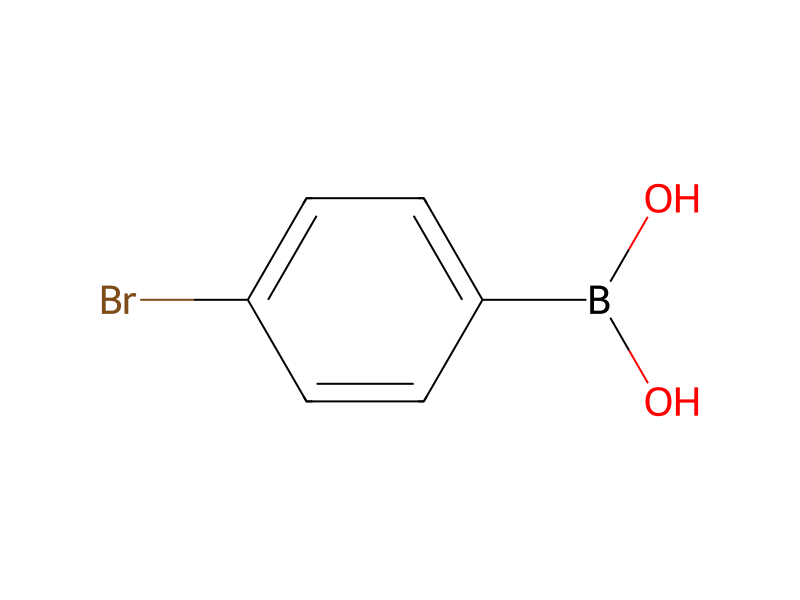




Procedure
Aq. 2 M sodium carbonate (3 mL)was added to a suspension of 400 mg (2.0 mmol) of 4-bromopyridine in 2 mL of benzene to give 2 clear phases, and argon was bubbled through the mixture for a few minutes before added 115 mg (0.10 mmol) of palladium tetrakis(triphenylphosphine). To the resulting mixture was added a solution of 200 mg (1.00 mmol) of 4-bromophenylboronic acid in 1 mL of ethanol, and the mixture was heated at reflux for 4 h. After cooling to room temperature, the mixture was partitioned between ethyl acetate (25 mL) and water (25 mL). The organic layer was dried over sodium sulfate and concentrated. Purification of the residue by silica gel chromatography, eluting with 25% to 50% ethyl acetate in hexane, gave 193 mg (82%) of 4-(4-bromophenyl)pyridine as a white solid: mp 124-126° C.
Workup
- customto give 2 clear phases, and argon
- customwas bubbled through the mixture for a few minutes
- temperaturethe mixture was heated
- temperatureat reflux for 4 h
- customthe mixture was partitioned between ethyl acetate (25 mL) and water (25 mL)
- dry with materialThe organic layer was dried over sodium sulfate
- concentrationconcentrated
- customPurification of the residue by silica gel chromatography
- washeluting with 25% to 50% ethyl acetate in hexane
Sources & evidence
- ORD record
- ord-43f0123bc7914220abcc7314f9c56554
- Source dataset
- uspto-grants-2000_03
- Patent number
- US06037472
Reaction notes
Loading…