Ethyl bromopyruvate → Ethyl 2-(3-hydroxy-2-pyridyl)-4-thiazolecarboxylate
Reaction equation

[OH:1][C:2]1[C:3]([C:8]([NH2:10])=[S:9])=[N:4][CH:5]=[CH:6][CH:7]=1.Br[CH2:12][C:13](=O)[C:14]([O:16][CH2:17][CH3:18])=[O:15]>C(O)C>[OH:1][C:2]1[C:3]([C:8]2[S:9][CH:12]=[C:13]([C:14]([O:16][CH2:17][CH3:18])=[O:15])[N:10]=2)=[N:4][CH:5]=[CH:6][CH:7]=1Participants
Reactant 2
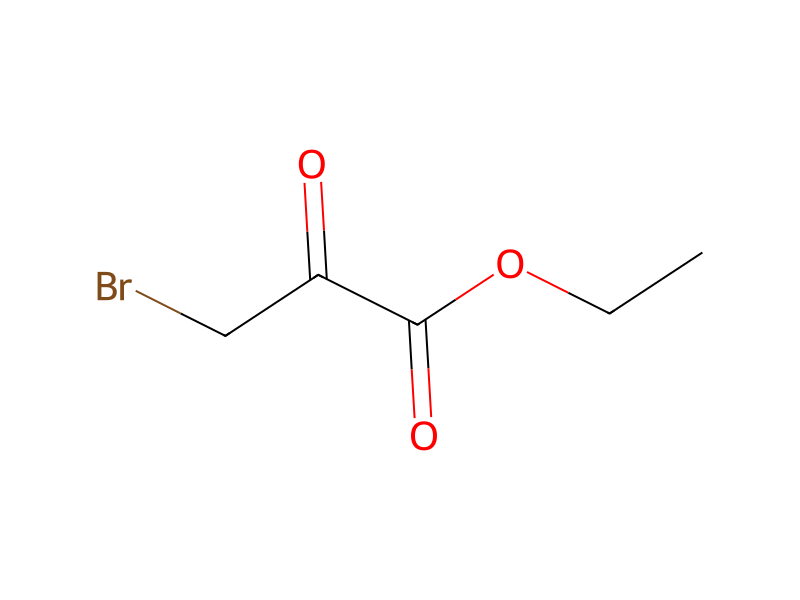

Product 1

Reagents, catalysts & solvents 1

Procedure
A solution of 3-hydroxythiopicolinamide (500 mg) in dry ethanol (25 ml) was added dropwise to a solution of ethyl bromopyruvate (0.542 ml) in dry ethanol (20 ml) under nitrogen atmosphere and the mixture was refluxed for 2 hours. The solvent was removed from the reaction mixture, and the residue was treated with water, neutralized with 4% aqueous sodium carbonate and extracted with ethyl acetate. The organic layer was washed with saturated aqueous NaCl, dried (anhydrous Na2SO4) and concentrated. The residue was purified by silica gel column chromatography (ethyl acetate:benzene=1:9). The second fraction was concentrated. The produced solids were recrystallized from methanol-water to give yellowish crystals of ethyl 2-(3-hydroxy-2-pyridyl)-4-thiazole carboxylate (260 mg, 32%), m.p. 131°-134° C.
Workup
- temperaturethe mixture was refluxed for 2 hours
- customThe solvent was removed from the reaction mixture
- additionthe residue was treated with water
- extractionextracted with ethyl acetate
- washThe organic layer was washed with saturated aqueous NaCl
- dry with materialdried (anhydrous Na2SO4)
- concentrationconcentrated
- customThe residue was purified by silica gel column chromatography (ethyl acetate:benzene=1:9)
- concentrationThe second fraction was concentrated
- customThe produced solids were recrystallized from methanol-water
Sources & evidence
- ORD record
- ord-8e0e2b2bfd184055bc14468b002d2c11
- Source dataset
- uspto-grants-1989_11
- Patent number
- US04879295
Reaction notes
Loading…