Propyl pyruvate → Propanoic acid,2-hydroxy-,propylester
Reaction equation

[C:1]([O:6][CH2:7][CH2:8][CH3:9])(=[O:5])[C:2]([CH3:4])=[O:3].C(ON1C[C@@H](P(C2CCCCC2)C2CCCCC2)C(=C=O)[C@H]1CP(C1C=CC=CC=1)C1C=CC=CC=1)(C)(C)C>C1C=CC=CC=1>[C:1]([O:6][CH2:7][CH2:8][CH3:9])(=[O:5])[CH:2]([CH3:4])[OH:3]Participants
4
Reactant 2
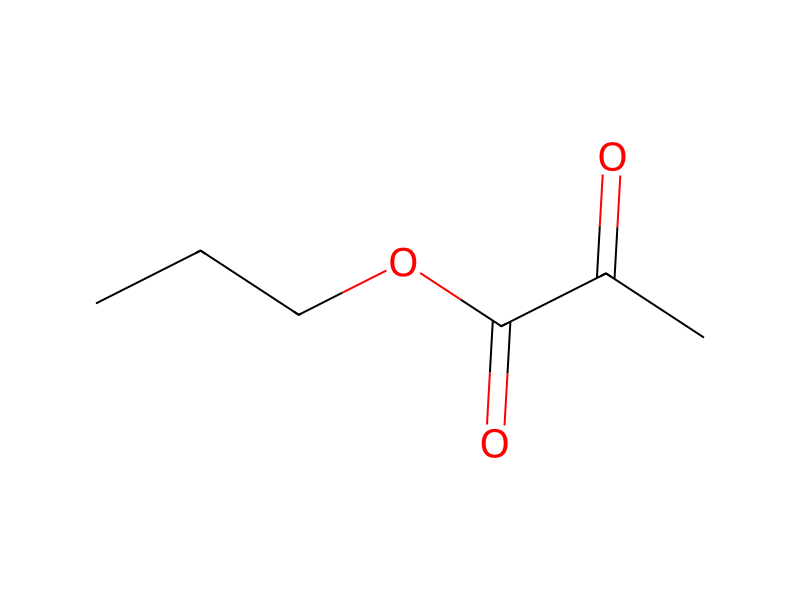

Product 1

Reagents, catalysts & solvents 1

Procedure
To 50 ml of benzene were added 13.0 g (100 m-mol) of propyl pyruvate, 1 mg of rhodium 1,5-cyclooctadiene chloride complex compound and 3.1 mg (0.0055 m-mol) of (2S,4S)-N-tert-butoxy-carbonyl-4-dicyclohexylphosphino-2-diphenylphosphinomethylpyrrolidine (BCPM) obtained in Example 4. An autoclave equipped with a stirrer, a pressure gauge and a thermometer was charged with the above mixture and a treatment was carried out in the same manner as described in Example 13 whereby 12.7 g (yield: 96.2%) of propyl lactate was obtained. [α]D =+10.5° (optical yield: 87%).
Workup
- customAn autoclave equipped with a stirrer
- additiona pressure gauge and a thermometer was charged with the above mixture
Sources & evidence
- ORD record
- ord-3e177e84ad094268a1774d630ff6db82
- Source dataset
- uspto-grants-1989_11
- Patent number
- US04879389
Reaction notes
Loading…