Benzoyl chloride → HCID 3312778, compound
Reaction equation

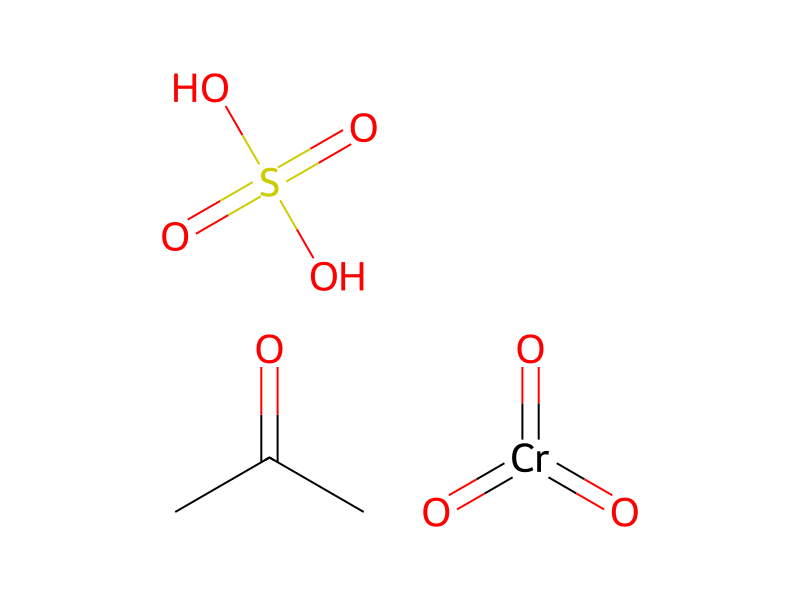
[NH2:1][CH:2]([CH:6]1[CH2:11][CH2:10][CH:9]([OH:12])[CH2:8][CH2:7]1)[C:3]([OH:5])=[O:4].[C:13](Cl)(=[O:20])[C:14]1[CH:19]=[CH:18][CH:17]=[CH:16][CH:15]=1.CC(C)=O.OS(O)(=O)=O.O=[Cr](=O)=O>>[C:13]([NH:1][CH:2]([CH:6]1[CH2:11][CH2:10][C:9](=[O:12])[CH2:8][CH2:7]1)[C:3]([OH:5])=[O:4])(=[O:20])[C:14]1[CH:19]=[CH:18][CH:17]=[CH:16][CH:15]=1Participants



Procedure
Bicyclic diamines of general formula (32), wherein P2 is a nitrogen protecting group, can be prepared as described in (Org. Mass Spectrum. (1984) 19(9), 459-460). Amino(4-hydroxyphenyl)acetic acid, purchased commercially, can be treated with Raney nickel and heat to provide amino(4-hydroxycyclohexyl)acetic acid. Amino(4-hydroxycyclohexyl)acetic acid can be treated with benzoyl chloride and then oxidized with Jones' reagent to provide (benzoylamino)(4-oxocyclohexyl)acetic acid. (Benzoylamino)(4-oxocyclohexyl)acetic acid can be subjected to a Beckmann rearrangement using hydroxylamine and a sulfonyl chloride such as phenyl sulfonyl chloride to provide (benzoylamino)(7-oxo-4-azepanyl)acetic acid. (Benzoylamino)(7-oxo-4-azepanyl)acetic acid can be treated with concentrated HCl and heat to provide 2-amino-3-(2-aminoethyl)hexanedioic acid. 2-Amino-3-(2-aminoethyl)hexanedioic acid can be distilled at 180-200° C./0.1 torr to provide octahydro[1,7]naphthyridine-2,8-dione. Octahydro[1,7]naphthyridine-2,8-dione can be treated with lithium aluminum hydride and monoprotected with a nitrogen protecting reagent such as acetyl chloride/acetic anhydride, di-tert-butyl dicarbonate, benzyloxycarbonyl chloride, or benzyl bromide to provide bicyclic diamines of general formula (32).
Sources & evidence
- ORD record
- ord-144e7f64b14a40a48a1fe6f708c6f22b
- Source dataset
- uspto-grants-2012_02
- Patent number
- US08119635B2
Reaction notes
Loading…