Ethyl Bromide → HCID 59243191, compound
Reaction equation

[OH:1][C:2]1[CH:3]=[C:4]([CH:9]=[C:10]([OH:12])[CH:11]=1)[C:5](OC)=O.[CH2:13](Br)[CH3:14].[C:16](=O)([O-])[O-].[K+].[K+].[OH-].[Na+].[NH2:24][C:25]1[C:30]([NH2:31])=[CH:29][CH:28]=[CH:27][N:26]=1.N1[C:36]2[CH:37]=[CH:38][CH:39]=[N:40][C:35]=2N=C1>CO.CN(C(ON1N=NC2C=CC=CC1=2)=[N+](C)C)C.F[P-](F)(F)(F)(F)F.CN(C=O)C.C(O)(=O)C.C(O)CCC.CCOCC>[CH2:13]([O:12][C:10]1[CH:9]=[C:4]([C:5]2[NH:31][C:30]3[C:25]([N:24]=2)=[N:26][CH:27]=[CH:28][CH:29]=3)[CH:3]=[C:2]([O:1][CH2:16][C:36]2[CH:35]=[N:40][CH:39]=[CH:38][CH:37]=2)[CH:11]=1)[CH3:14]Participants
Reactant 6

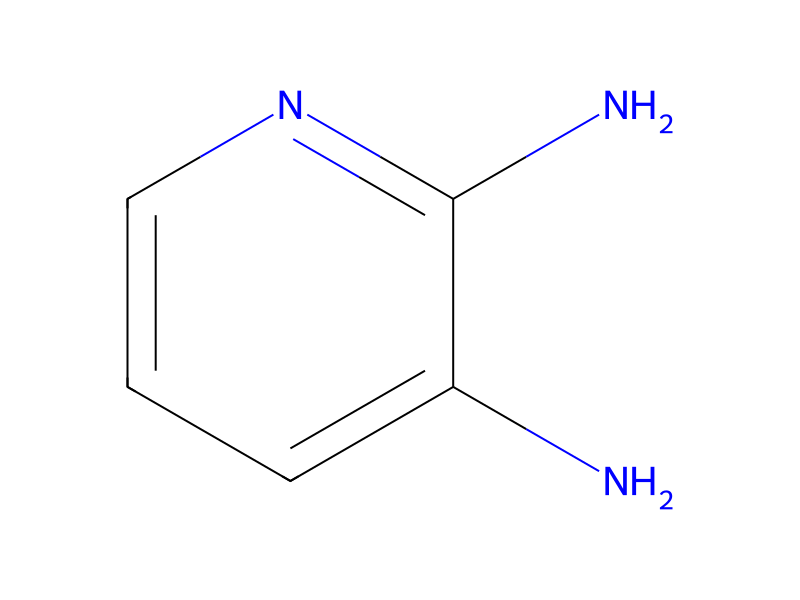


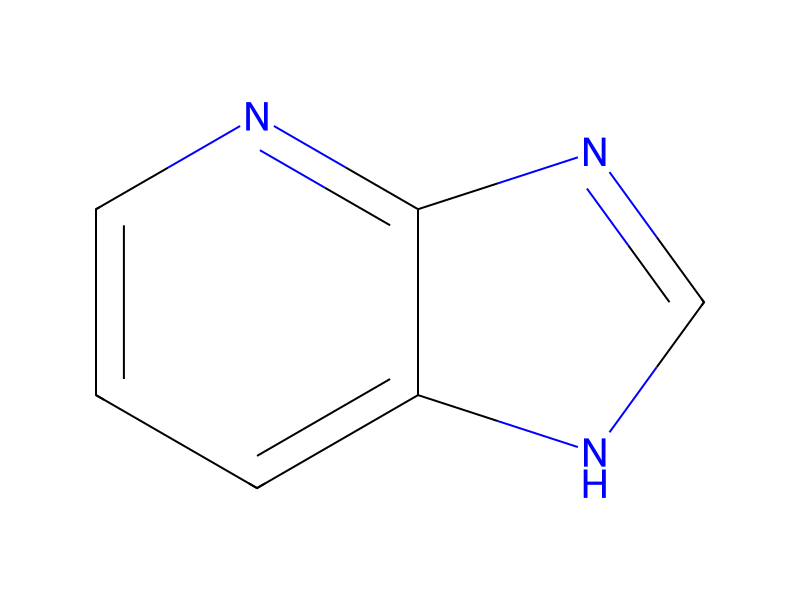

Product 1

Reagents, catalysts & solvents 6






Procedure
Reaction of Methyl 3,5-dihydroxybenzoate with ethyl bromide in the presence of potassium carbonate and dimethylformamide for 18 h at room temperature gave a 1:1 mixture of the mono and bis ether adducts. These compounds were separated by chromatography column. The mono adduct was reacted with 3-pyridylmethylbromide in the presence of potassium carbonate and dimethylformamide to give the desired bis ether. The ether was hydrolyzed with sodium hydroxide in methanol, acidified and the subsequent acid was reacted with 2,3-diaminopyridine in HBTU, TEA and DMF. The amide was cyclized to the imidazopyridine by reaction in the microwave at 180° C. for 30 min in 1:1 n-butanol:glacial acetic acid. 1H NMR (400 MHz, CDCl3) δ ppm 8.54 (s, 1H), 8.41 (m, 2H), 7.50 (m, 1H), 7.28 (m, 1H), 7.25 (m, 1H), 6.99 (m, 1H), 6.81 (m, 1H), 6.69 (m, 1H), 6.68 (m, 1H), 5.16 (s, 2H), 4.30 (br s, 1H), 4.09 (q, 2H, J=7 Hz), 1.43 (t, 3H, J=7 Hz); Calc'd for C20H18N4O2; m/z (M+H+)=347; found 347.
Workup
- customgave
- customThese compounds were separated by chromatography column
- customThe mono adduct was reacted with 3-pyridylmethylbromide in the presence of potassium carbonate and dimethylformamide
Sources & evidence
- ORD record
- ord-d31f86158af34e8189e781ba3f447d48
- Source dataset
- uspto-grants-2012_02
- Patent number
- US08124617B2
Reaction notes
Loading…