p-Anisoyl chloride → HCID 178450486, compound
Reaction equation

[C:1]([C:6](=[CH:12][NH:13][C:14]1[CH:19]=[CH:18][CH:17]=[CH:16][C:15]=1[CH2:20][OH:21])[C:7]([O:9][CH2:10][CH3:11])=[O:8])(=[O:5])[CH2:2][CH2:3][CH3:4].[C:22](Cl)(=[O:31])[C:23]1[CH:28]=[CH:27][C:26]([O:29][CH3:30])=[CH:25][CH:24]=1>N1C=CC=CC=1>[C:1]([C:6](=[CH:12][NH:13][C:14]1[CH:19]=[CH:18][CH:17]=[CH:16][C:15]=1[CH2:20][O:21][C:22](=[O:31])[C:23]1[CH:28]=[CH:27][C:26]([O:29][CH3:30])=[CH:25][CH:24]=1)[C:7]([O:9][CH2:10][CH3:11])=[O:8])(=[O:5])[CH2:2][CH2:3][CH3:4]Participants
4
Reactant 2
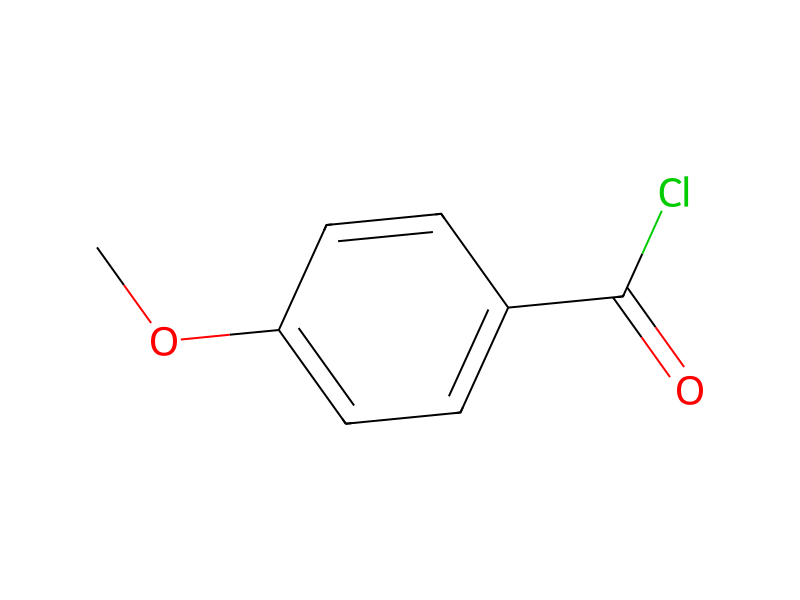

Product 1

Reagents, catalysts & solvents 1

Procedure
Ethyl 2-butyryl-3-(2-(hydroxymethyl)phenylamino)-acrylate (14.6 g, 50 mmol) was dissolved in pyridine (50 ml), cooled in ice, and p-anisoyl chloride (12.8 g, 75 mmol) added dropwise. The mixture was stirred 16 hours with warming to room temperature, then evaporated, taken up in dichloromethane, washed with aqueous sodium bicarbonate, dried and evaporated. Crystallisation from ether gave ethyl 2-butyryl-3-(2-(4-methoxybenzoyloxymethyl)phenylamino)acrylate (12.3 g, 58%).
Workup
- temperaturecooled in ice
- customevaporated
- washwashed with aqueous sodium bicarbonate
- customdried
- customevaporated
- customCrystallisation from ether
Sources & evidence
- ORD record
- ord-aa65652435d84dea9050867d4911d3f3
- Source dataset
- uspto-grants-1995_07
- Patent number
- US05432182
Reaction notes
Loading…