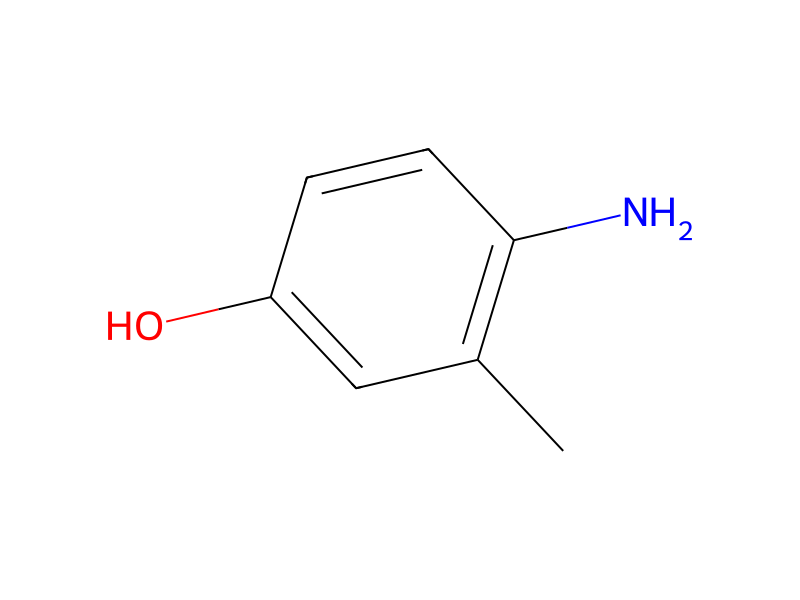
4-Amino-m-cresol → HCID 19923004, compound
Reaction equation

[C:1]([C:6]1[CH:7]=[N:8][C:9]2[C:14]([C:15]=1[Cl:16])=[CH:13][CH:12]=[CH:11][C:10]=2[CH2:17][O:18]C(=O)C1C=CC=CC=1)(=[O:5])[CH:2]([CH3:4])[CH3:3].O[C:28]1[CH:34]=[CH:33][C:31]([NH2:32])=[C:30]([CH3:35])[CH:29]=1>O1CCOCC1>[ClH:16].[C:1]([C:6]1[CH:7]=[N:8][C:9]2[C:14]([C:15]=1[NH:32][C:31]1[CH:33]=[CH:34][CH:28]=[CH:29][C:30]=1[CH3:35])=[CH:13][CH:12]=[CH:11][C:10]=2[CH2:17][OH:18])(=[O:5])[CH:2]([CH3:3])[CH3:4]Participants
4
Reactant 2

Product 1

Reagents, catalysts & solvents 1

Procedure
A solution of 3-isobutyryl-4-chloro-8-(benzoyloxymethyl)quinoline (3.68 g, 10 mmol) and 4-hydroxy-2-methylaniline (1.35 g, 11 mmol) in dioxan (50 ml) was heated at reflux for 2 hours, then the dioxan evaporated and the residue taken up in 1% methanolic sodium hydroxide (100 ml) and stirred 1.5 hours at room temperature. The methanol was evaporated, the residue taken up in water, adjusted to pH 7, and the solid filtered off. This was converted to the salt with ethanolic hydrogen chloride, then recrystallised from aqueous ethanol to give 3-isobutyryl-4-(2-methylphenylamino)-8-(hydroxymethyl)quinoline hydrochloride (1.15 g, 30%), m.p. 225°-255° (dec).
Workup
- temperatureat reflux for 2 hours
- customthe dioxan evaporated
- customThe methanol was evaporated
- filtrationthe solid filtered off
- customrecrystallised from aqueous ethanol
Sources & evidence
- ORD record
- ord-3065a111535648fb8b4d84cb4b56e267
- Source dataset
- uspto-grants-1995_07
- Patent number
- US05432182
Reaction notes
Loading…