Water → 4-Phenylpyridine-2,6-dicarboxylic acid
Reaction equation

[C:1]1([C:7]2[CH:12]=[C:11]([C:13]3[O:14]C=CC=3)[N:10]=[C:9]([C:18]3[O:19]C=CC=3)[CH:8]=2)[CH:6]=[CH:5][CH:4]=[CH:3][CH:2]=1.C([OH:27])(C)(C)C.[O-][Mn](=O)(=O)=O.[K+].[OH2:34]>>[C:1]1([C:7]2[CH:8]=[C:9]([C:18]([OH:19])=[O:34])[N:10]=[C:11]([C:13]([OH:14])=[O:27])[CH:12]=2)[CH:2]=[CH:3][CH:4]=[CH:5][CH:6]=1Participants
5


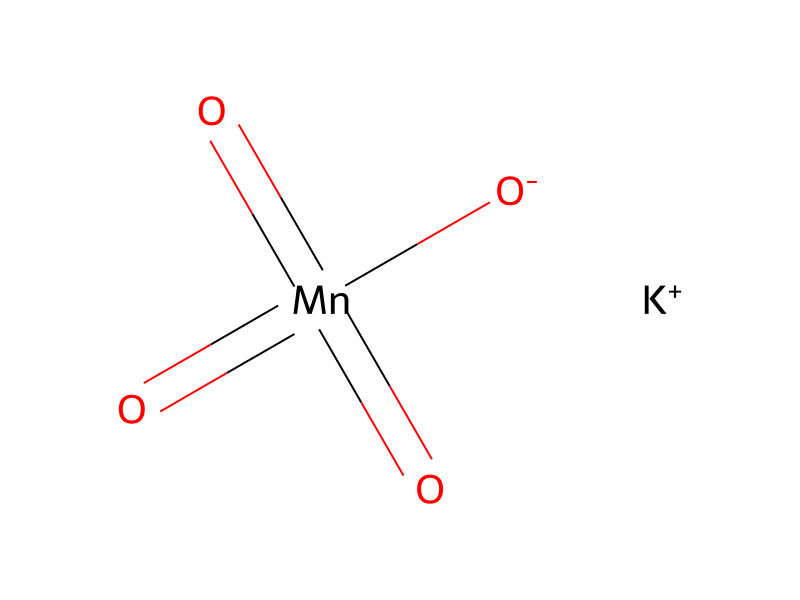


Procedure
The product of step b is added to the t-butanol. The mixture is heated and stirred then the H2O is added and the KMnO4 is added in portions over about 30 minutes at 75° C. The mixture is refluxed for 90 minutes. The product is worked up to give crystals of the desired 4-phenyl-2,6-pyridinedicarboxylic acid. The dicarboxylic acid which results is useful in its own right in the present invention as a ligand.
Workup
- temperatureThe mixture is heated
- temperatureThe mixture is refluxed for 90 minutes
Sources & evidence
- ORD record
- ord-c28a82021ffc4bfe91e0aa824c081f5f
- Source dataset
- uspto-grants-1990_05
- Patent number
- US04925804
Reaction notes
Loading…