Ethanol → HCID 14624393, compound
Reaction equation

[C:1]([C:5]1[N:9]=[C:8](SC)[N:7]([C:12]2[C:17]([Cl:18])=[CH:16][C:15]([Cl:19])=[CH:14][C:13]=2[Cl:20])[N:6]=1)([CH3:4])([CH3:3])[CH3:2].[CH2:21](O)C.O[O:25][S:26]([O-:28])=O.[K+]>O>[C:1]([C:5]1[N:9]=[C:8]([S:26]([CH3:21])(=[O:28])=[O:25])[N:7]([C:12]2[C:17]([Cl:18])=[CH:16][C:15]([Cl:19])=[CH:14][C:13]=2[Cl:20])[N:6]=1)([CH3:2])([CH3:3])[CH3:4]Participants
5
Reactant 3


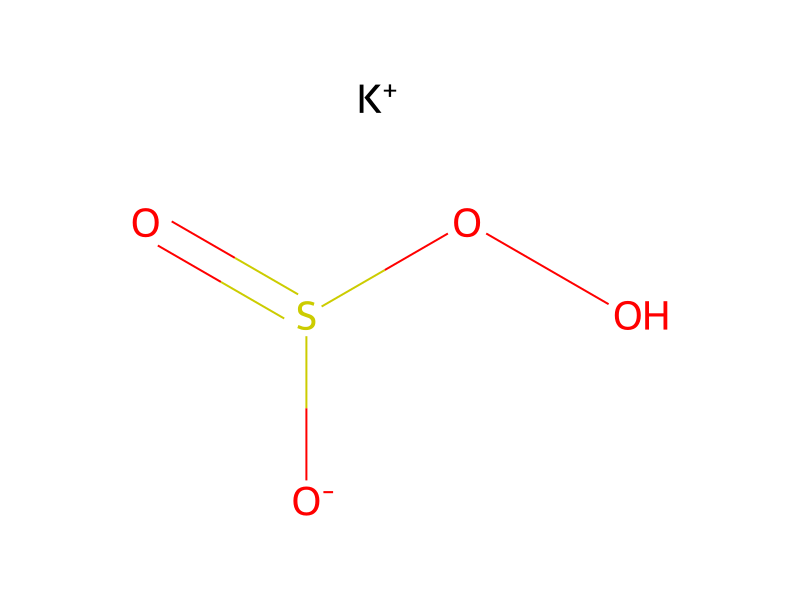
Product 1

Reagents, catalysts & solvents 1

Procedure
3.5 g (0.01 mol) of 3-(tert-butyl)-5-methylthio-1-(2,4,6-trichlorophenyl)-1H-1,2,4-triazole was added to 120 ml of 85% ethanol, and 24.6 g (0.04 mol) of Oxone (trade mark) was further added thereto. The mixture was stirred at room temperature for 4 hours. Then, water was added to such an extent that Oxone (as described above) remained in a small amount, and the mixture was extracted with dichloromethane. The dichloromethane layer was dried, and then the solvent was distilled off. The residue was purified by silica gel column chromatography to obtain 3.0 g (yield: 78.9 g) of the desired compound as white powder. Melting point: 179°-180° C.
Workup
- additionwas further added
- extractionthe mixture was extracted with dichloromethane
- dry with materialThe dichloromethane layer was dried
- distillationthe solvent was distilled off
- customThe residue was purified by silica gel column chromatography
Sources & evidence
- ORD record
- ord-2924628c6b314f38aa6f089d0155ef49
- Source dataset
- uspto-grants-1990_05
- Patent number
- US04925864
Reaction notes
Loading…